︎

Kystlandskap i sommerlys
– Kunsten finner sted
Why did so many of Norway's foremost artists and architects seek out the outermost reaches of the Oslofjord? From the late 1800s and through more than a hundred years, Christian Krohg, Eilif Peterssen, Ludvig Karsten, Bernhard Folkestad, Jean Heiberg, Astri Welhaven Heiberg, Lul Krag, Carl von Hanno, Sverre Fehn and Dag Alveng found motifs and inspiration in a distinctive coastal landscape around Sandø, Hvasser, Brøtsø and Tjøme.Coastal Landscape in Summer Light – Art Takes Place is a richly illustrated anthology in which eleven art historians and curators revisit these places anew and chart an overlooked but essential side of Norwegian modernism — where art literally takes place.
Orfeus Publishing
IFIKK
Haugar Art Museum
©ORFEUS PUBLISHING 2026
Kystlandskap i sommerlys
– Kunsten finner sted
ISBN 978-82-93959-36-6
1st edition 2026
Editors:
Espen Johnsen, Bente Larsen, Øystein Sjåstad
Texts:
Luisa Aubert, Øivind Storm Bjerke, Signe Endresen, Kirsten S. Faye, Espen Johnsen, Bente Larsen, Kathrine Lund, MaryClaire Pappas, Øystein Sjåstad, Øystein Ustvedt, Wenche Volle
Publishing editor:
Inger Schjoldager
English proofreading: Peter Cripps
Graphic design/repro: Halvor Bodin, Tjøme
Paper/endpapers: GardaPat 13 Bianka 135 g/m²
Cover: Munken Lynx Rough 300 g/m²
Typography: ABC Favorit
Printing: Livonia Print SIA, 2026, Latvia
© Copyright to the artworks
BONO – Visual Arts Copyright Society in Norway, Oslo 2026. Dag Alveng – Reidar Aulie – Jean Heiberg – Marianne Heske
Department of Philosophy, Classics, History of Art and Ideas (IFIKK). Faculty of Humanities, University of Oslo.
More documentation photos to follow.
Kystlandskap i sommerlys
– Kunsten finner sted
ISBN 978-82-93959-36-6
1st edition 2026
Editors:
Espen Johnsen, Bente Larsen, Øystein Sjåstad
Texts:
Luisa Aubert, Øivind Storm Bjerke, Signe Endresen, Kirsten S. Faye, Espen Johnsen, Bente Larsen, Kathrine Lund, MaryClaire Pappas, Øystein Sjåstad, Øystein Ustvedt, Wenche Volle
Publishing editor:
Inger Schjoldager
English proofreading: Peter Cripps
Graphic design/repro: Halvor Bodin, Tjøme
Paper/endpapers: GardaPat 13 Bianka 135 g/m²
Cover: Munken Lynx Rough 300 g/m²
Typography: ABC Favorit
Printing: Livonia Print SIA, 2026, Latvia
© Copyright to the artworks
BONO – Visual Arts Copyright Society in Norway, Oslo 2026. Dag Alveng – Reidar Aulie – Jean Heiberg – Marianne Heske
Department of Philosophy, Classics, History of Art and Ideas (IFIKK). Faculty of Humanities, University of Oslo.
More documentation photos to follow.


Book release at The National Museum’s library and archive, Oslo 260526.


Exhibition opening at Haugar Art Museum, Tønsberg 260530.

Exhibition opening at Haugar Art Museum, Tønsberg 260530. The exhibition includes three photos by me from Sandø and Hvasser, 80 X 120 cm. The Sommerlys exhibition is open until 260823.


En norsk europeer i København
– Eicind Eckbos liv og virke i København
“Distinguished Merits and Actions”from the statutes of the Order of the Dannebrog, 1808
As Denmark’s Ambassador to Norway, I am pleased to extend my congratulations on the publication of A Norwegian European in Copenhagen. The book offers an insight into the extraordinary life and activities of the businessman and patron Eivind Eckbo (1873–1966).
Eivind Eckbo’s longstanding contribution to Danish-Norwegian business and culture was recognised when King Frederik IX appointed him Knight of the First Class of the Order of the Dannebrog in 1959. The grounds were that Eivind Eckbo had promoted mutual understanding and cultural relations between the two countries, Norway and Denmark.
In Norway, Eckbo's Legat—known as one of the country’s most venerable charitable foundations—was established by Alice Mary Higford Eckbo (1876–1960) and Eivind Eckbo in 1923. Each year, Eckbo's Foundation distributes substantial sums in support of arts and culture, medical research, and many other causes.
That Eivind Eckbo built a significant business presence in Denmark is less widely known. There he owned and operated several industrial enterprises, including De Danske Oliemøller og Sæbefabrikker (the Danish Oil Mills and Soap Factories) and the property company Ejendomsaktieselskabet Hermes. As a major shareholder and advocate for Nordisk Film, he also helped to safeguard the Danish company’s rights.
In Copenhagen he founded the Eivind Eckbo Danish-Norwegian Foundation, whose purpose is to support Danish-Norwegian relations and cooperation. A fine example of this was the Foundation’s support for an exhibition collaboration between the Vigeland Museum, the Glyptotek in Copenhagen, and Faaborg Museum in 2025. The exhibition presented works by the great Danish sculptor Kai Nielsen (1882–1924) at the Vigeland Museum.
In 1934, Eivind Eckbo became the owner of Sct. Annæ Passage, the arcade connecting Bredgade and Store Kongensgade in Copenhagen. This distinctive cultural environment is carefully described in the book, in essays by the Danish art historian Dr Lotte Thrane and the Norwegian architectural historian Dr Mathilde Sprovin, and will likely be of interest to anyone with a passion for the architectural history of Copenhagen.
Congratulations on this publication!
Oslo/Copenhagen, Spring 2026
Louise Bang Jespersen
Ambassador of Denmark to Norway
Orfeus Publishing
Eckbos Legat
©ORFEUS PUBLISHING
En norsk europeer i København
– Eivind Eckbos liv og virke i Danmark
ISBN: 978-82-93959-32-8
1st edition 2026
This book has been produced in collaboration with Eivind Eckbos Dansk-Norske Legat
Text:
Dag Blakkisrud
Mathilde Sprovin
Lotte Thrane
Editor:
Birgitte M. Siem
Graphic design/repro: Halvor Bodin
Paper: Arctic Matt 150 g/m²
Endpapers: Munken Lynx 150 g/m²
Cover cloth: Brillianta 4235
Typography: Arizona
Trykk: Livonia Print SIA, 2026, Latvia
More documentation photos to come
En norsk europeer i København
– Eivind Eckbos liv og virke i Danmark
ISBN: 978-82-93959-32-8
1st edition 2026
This book has been produced in collaboration with Eivind Eckbos Dansk-Norske Legat
Text:
Dag Blakkisrud
Mathilde Sprovin
Lotte Thrane
Editor:
Birgitte M. Siem
Graphic design/repro: Halvor Bodin
Paper: Arctic Matt 150 g/m²
Endpapers: Munken Lynx 150 g/m²
Cover cloth: Brillianta 4235
Typography: Arizona
Trykk: Livonia Print SIA, 2026, Latvia
More documentation photos to come


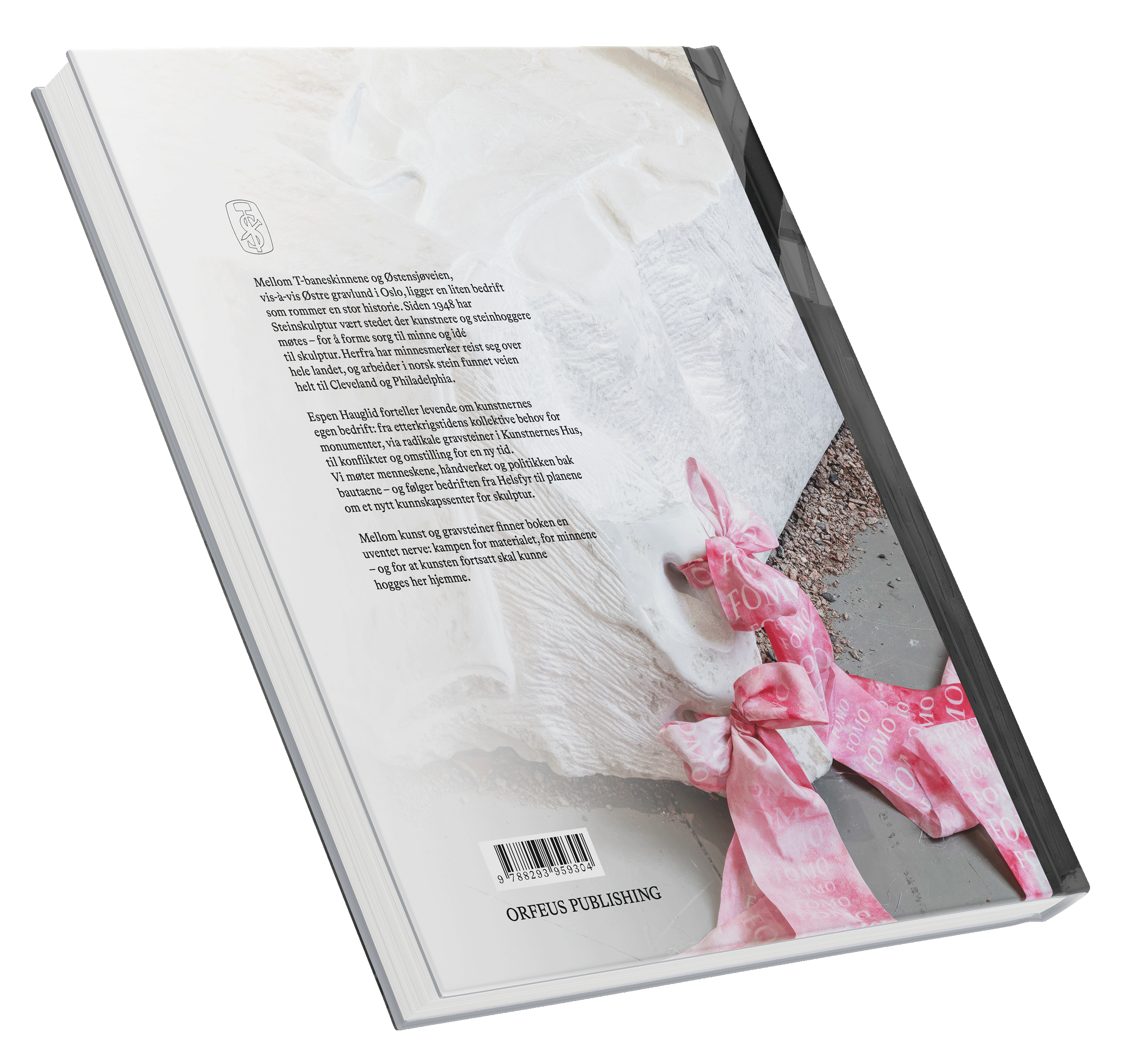
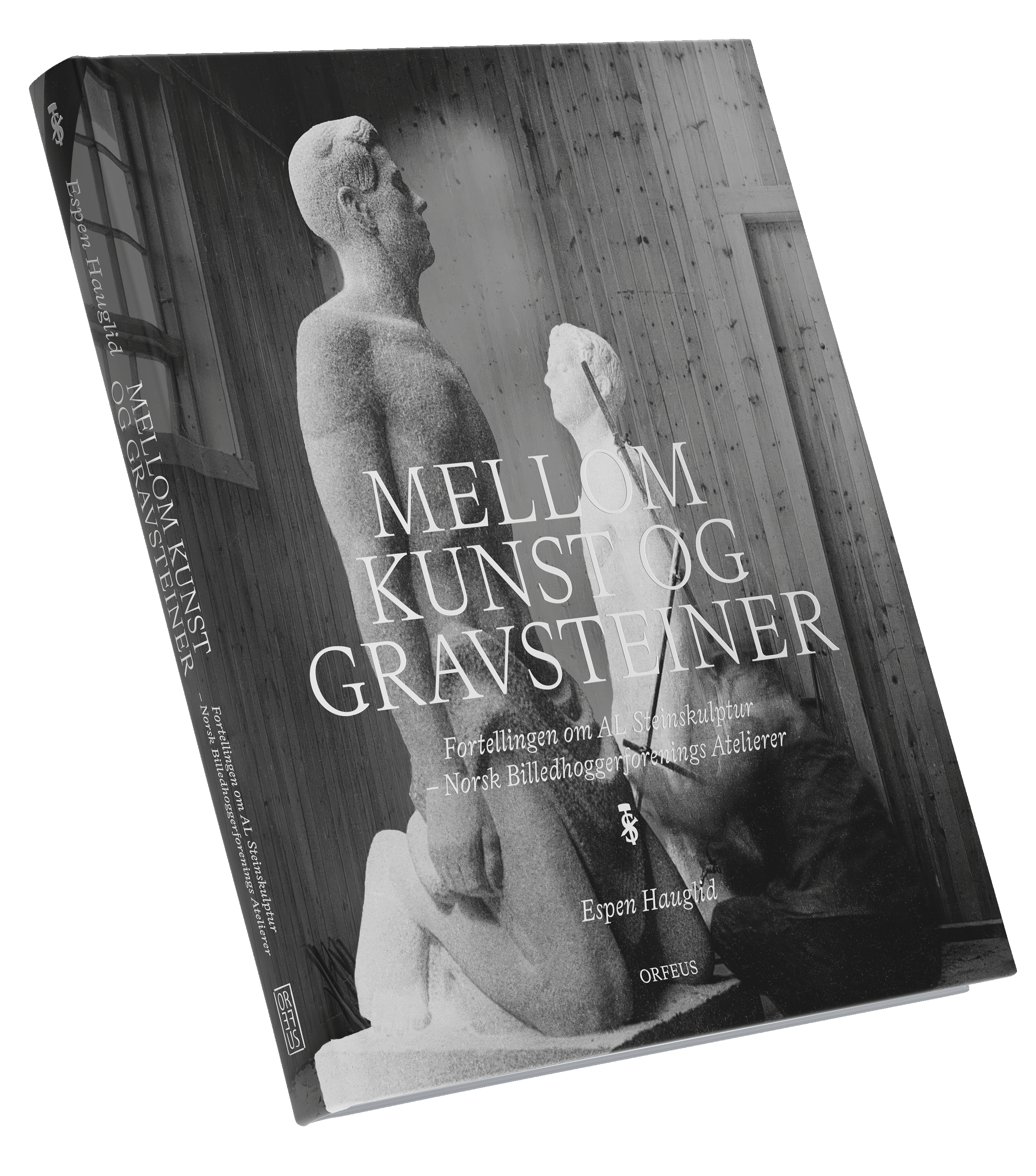
Mellom kunst og gravsteiner
– En fortelling om SA Steinskulptur
Espen Hauglid offers a vivid account of the artists’ own enterprise: from the post-war collective need for monuments, via radical gravestones exhibited at Kunstnernes Hus, to conflicts and restructuring for a new era.
We meet the people, the craft and the politics behind the monoliths – and follow the business from Helsfyr to the plans for a new centre of knowledge for sculpture. Between art and gravestones, the book finds an unexpected tension: the struggle for the material, for the memories – and for ensuring that art can still be carved here at home.
© Orfeus Publishing
Author: Espen Hauglid
Publishing editor: Birgitte M. Siem
The publication was produced in collaboration with SA Steinskulptur.
Design/repro: Halvor Bodin
Orfeus Publishing
View all projects with Orfeus Publishing here.
2025
190 x 230 mm
160 pages
ISBN: 978-82-93959-30-4
Livonia Print SIA, 2025, Latvia
Paper: Amber Graphic 150 g/m²
Book jacket: Geltex 11 LS
Typography: Bradford LL
Language: Norwegian
Documentation photos to come
190 x 230 mm
160 pages
ISBN: 978-82-93959-30-4
Livonia Print SIA, 2025, Latvia
Paper: Amber Graphic 150 g/m²
Book jacket: Geltex 11 LS
Typography: Bradford LL
Language: Norwegian
Documentation photos to come
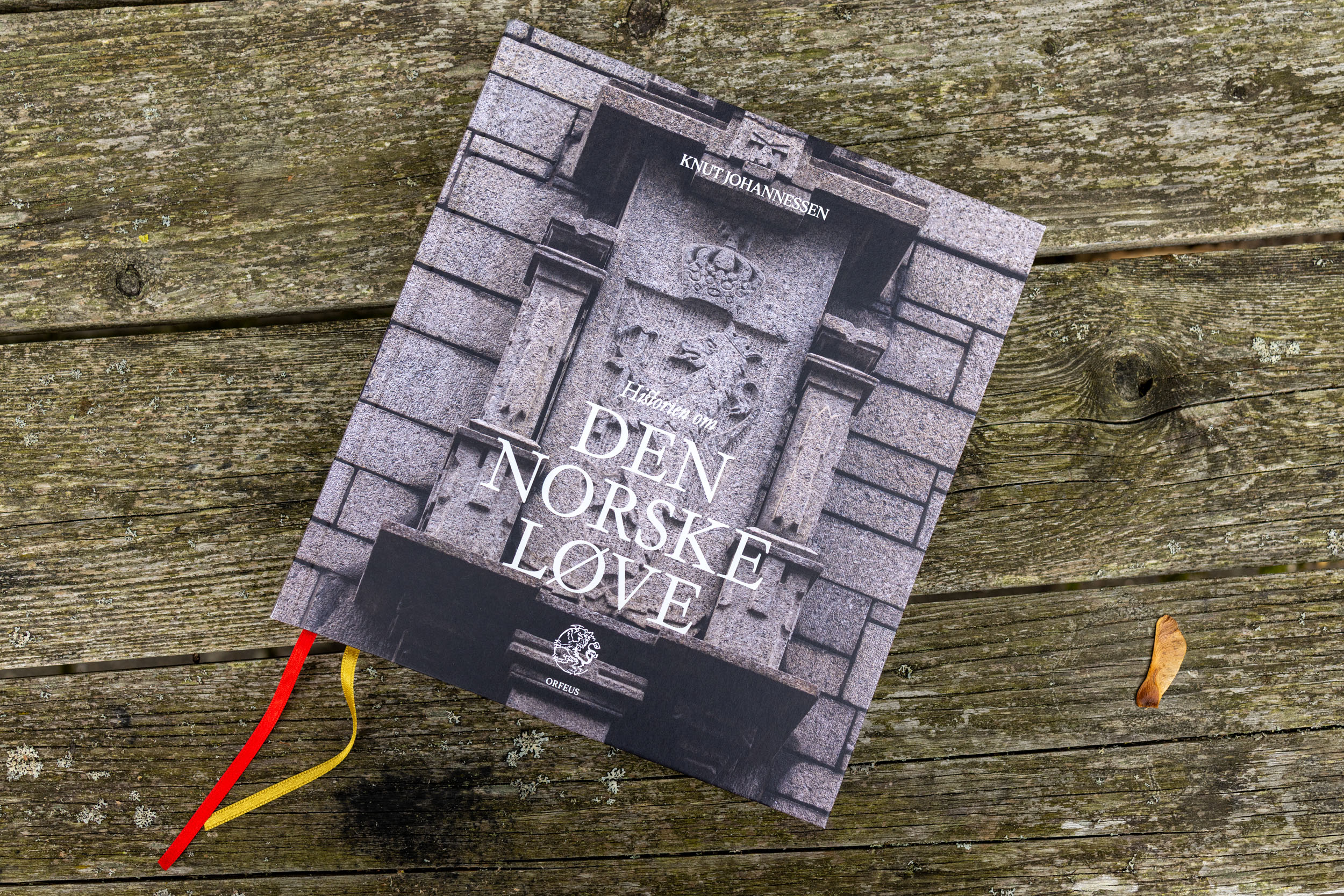
Historien om den norske løve
Knut Johannessen
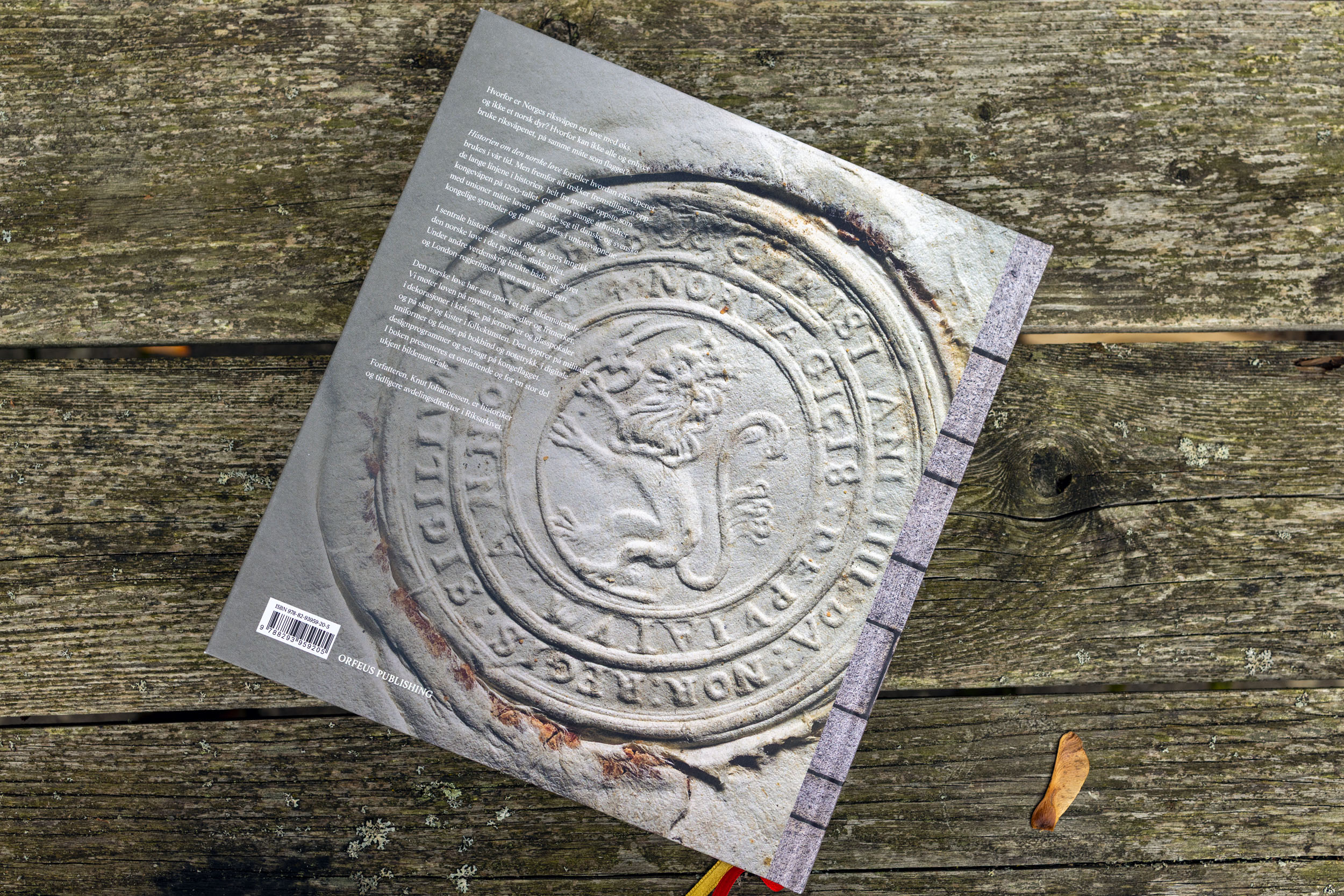
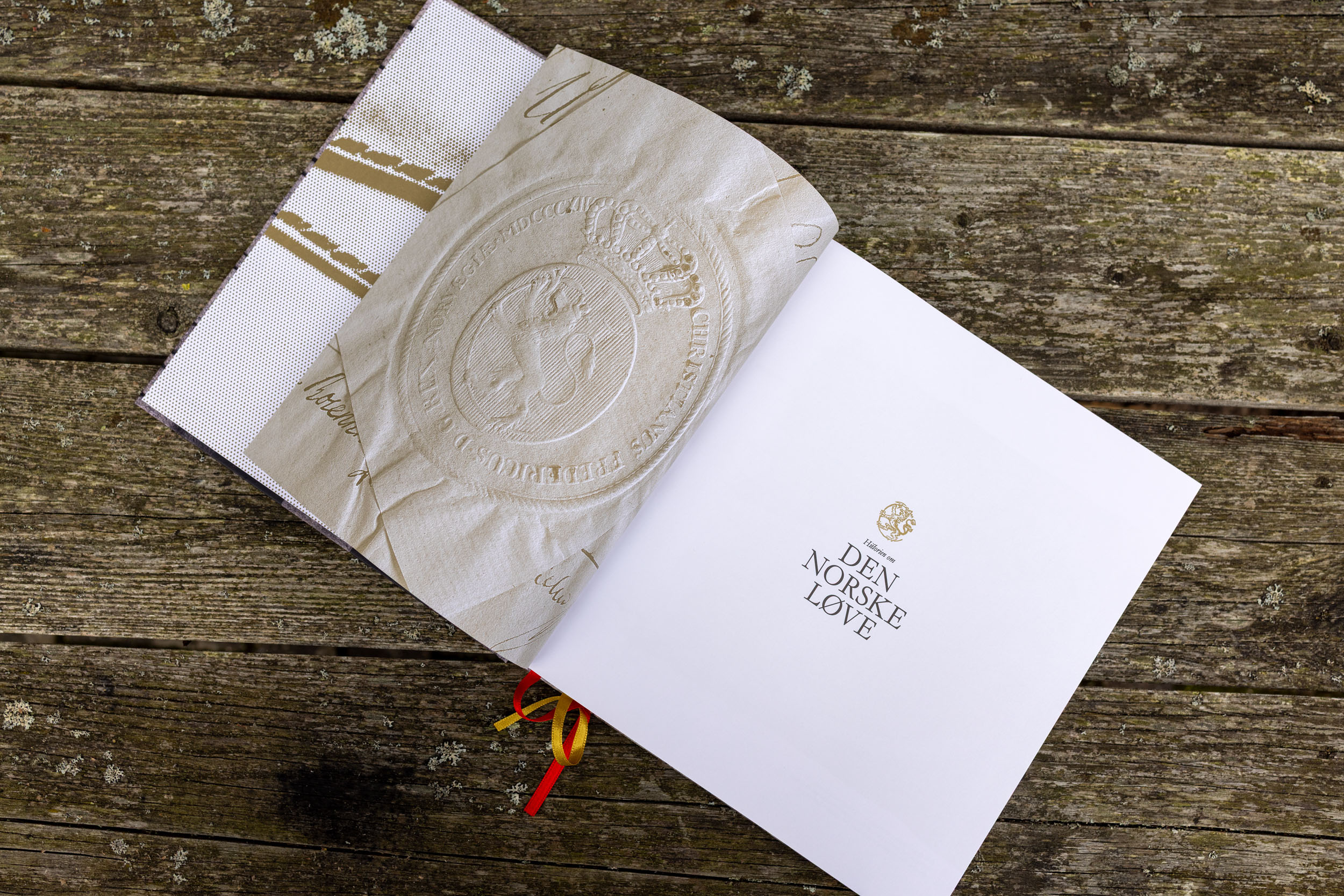
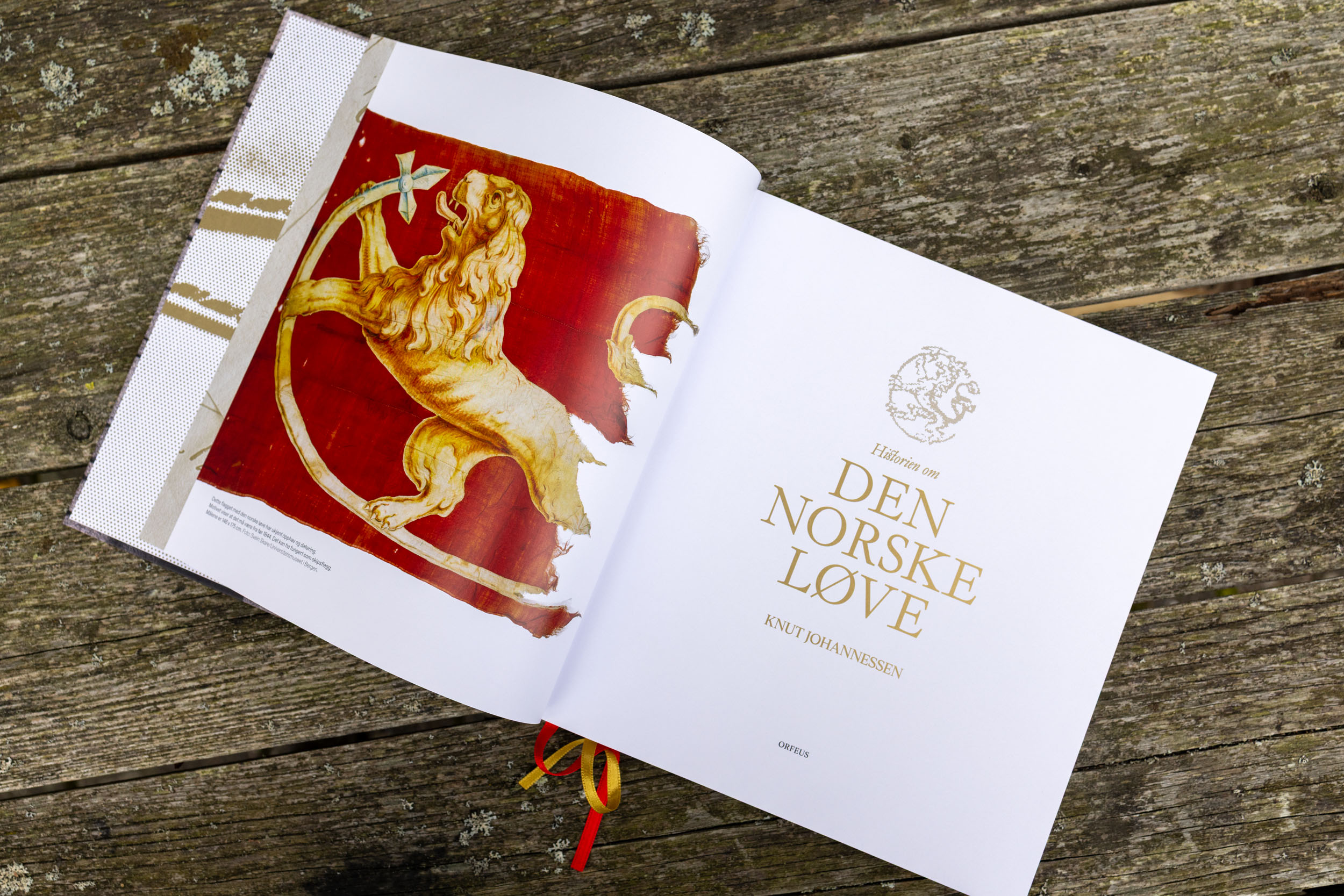
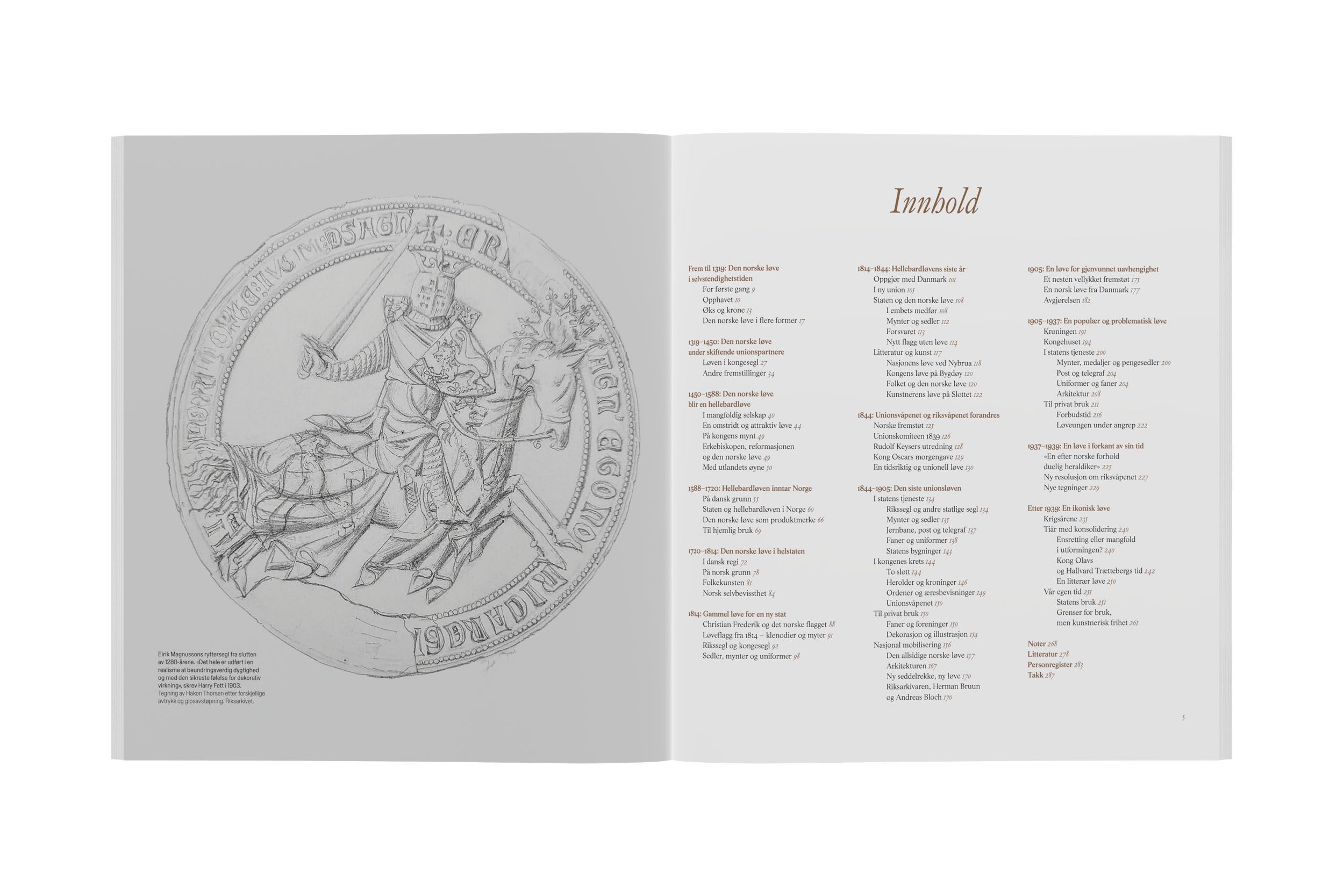
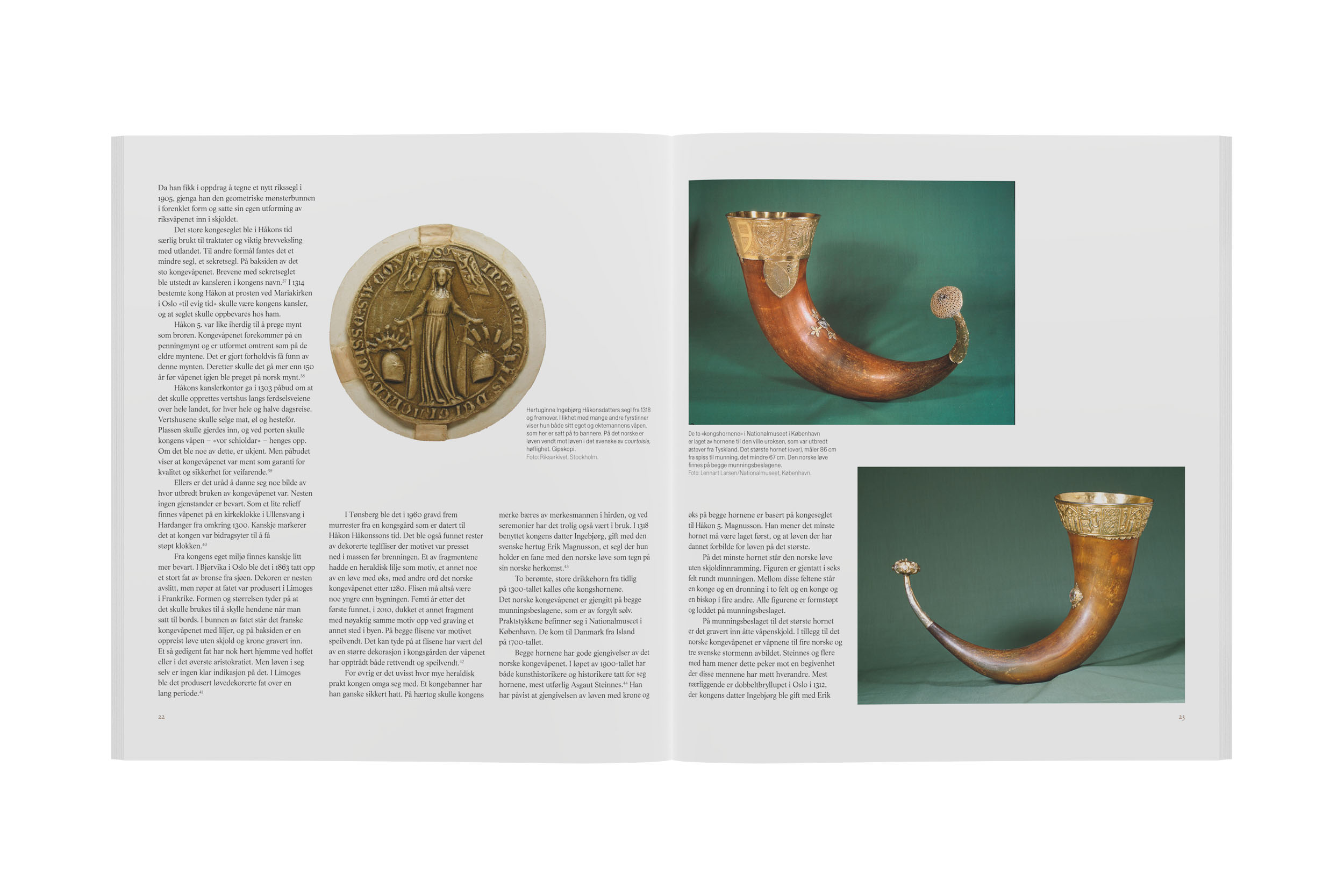
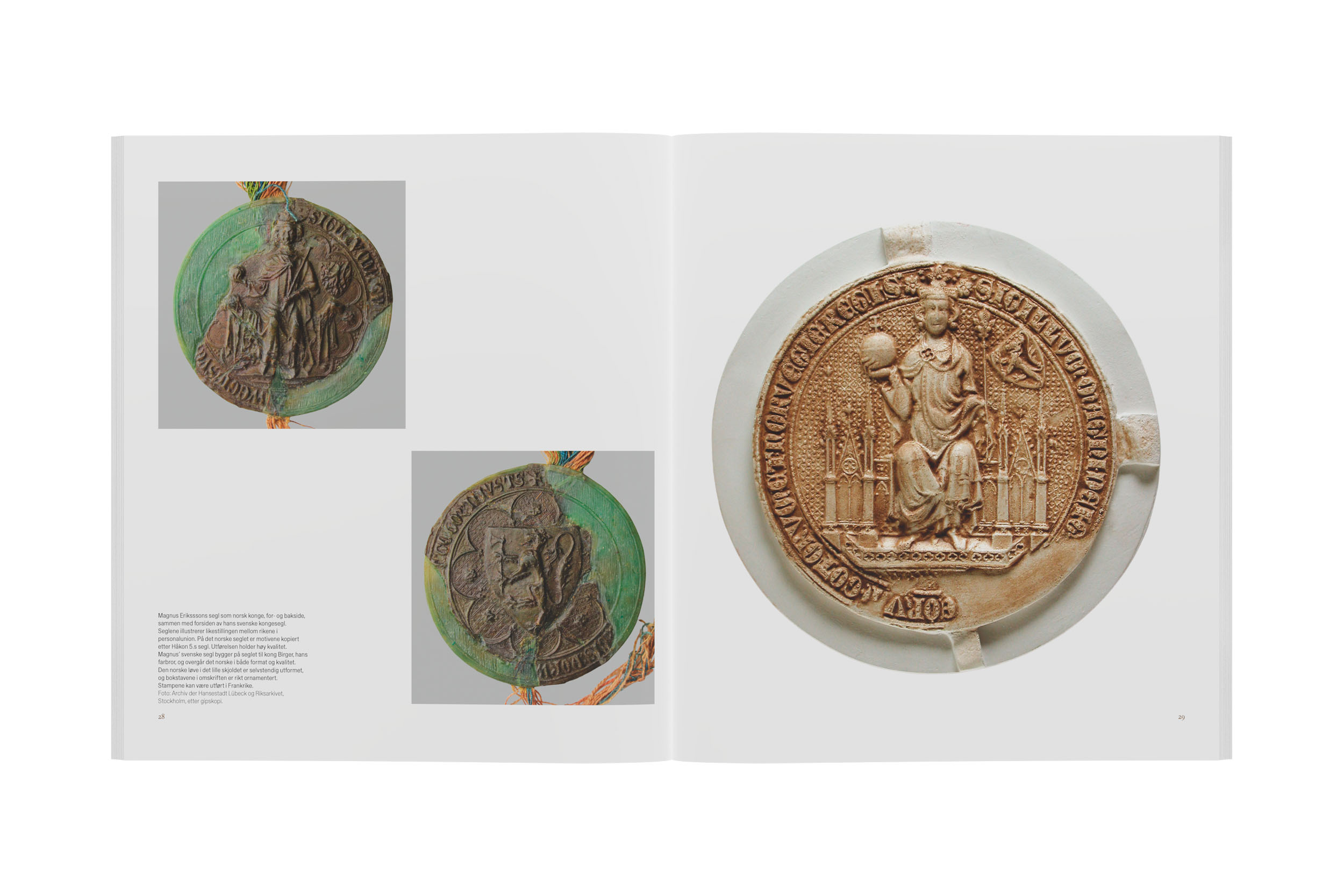
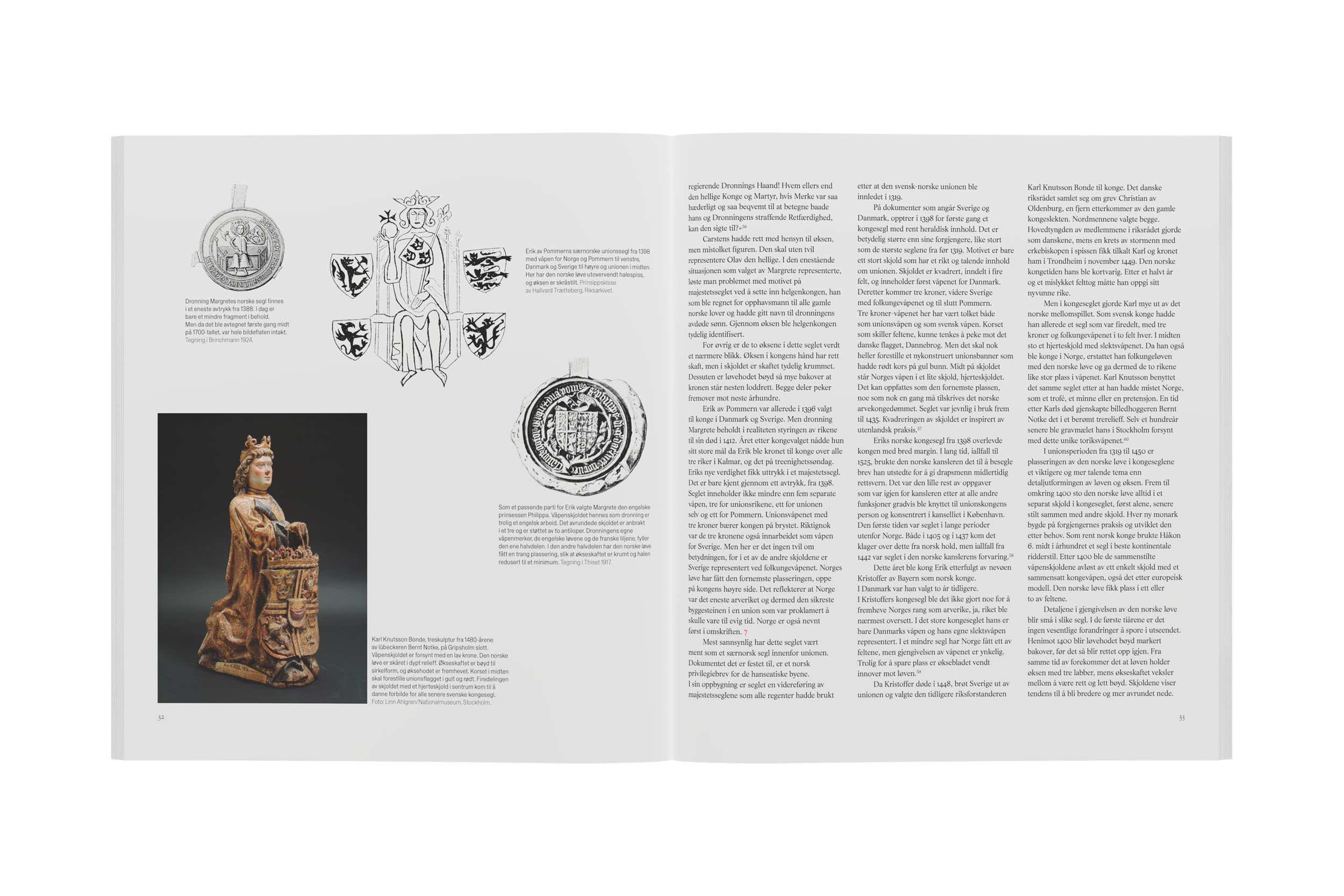
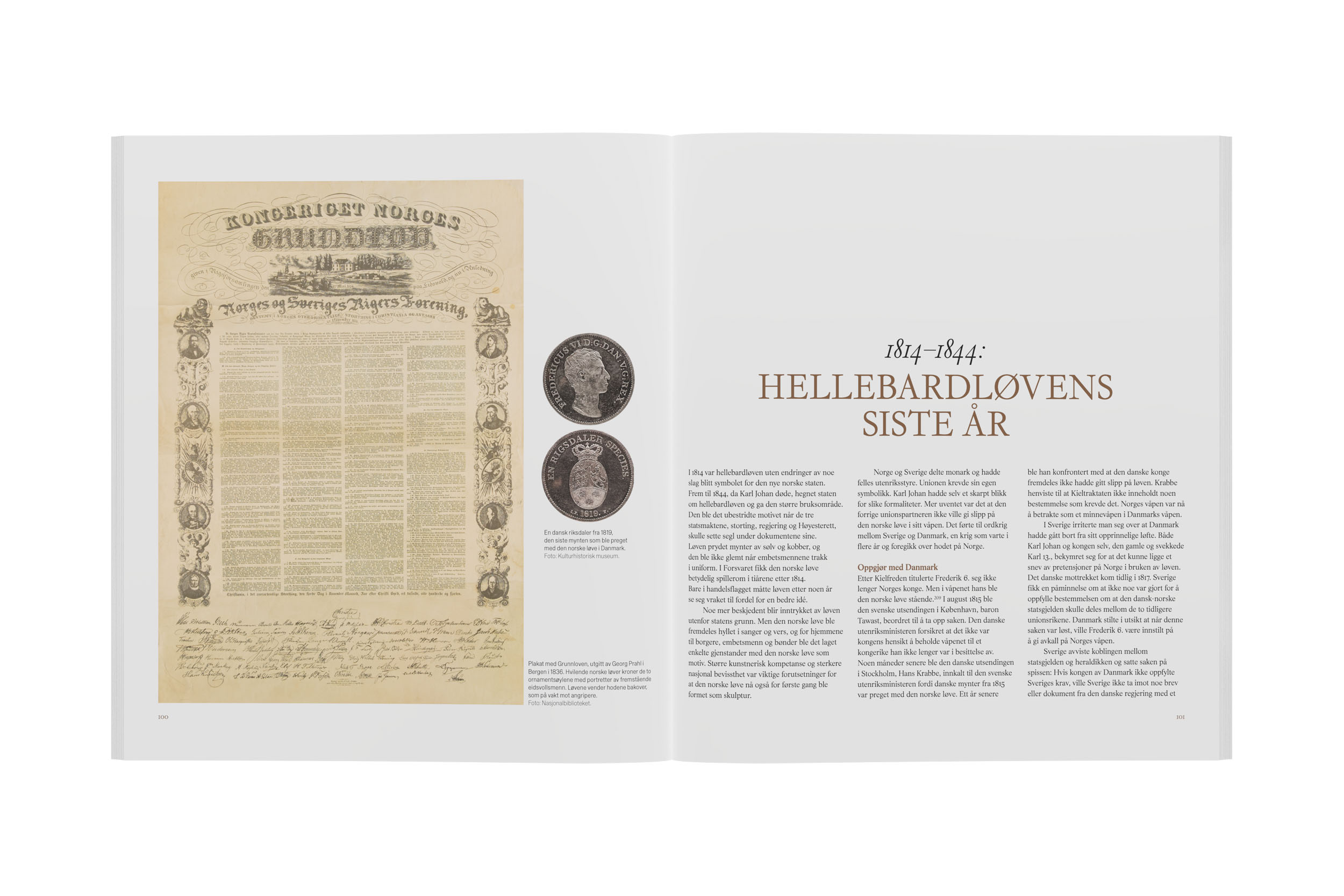
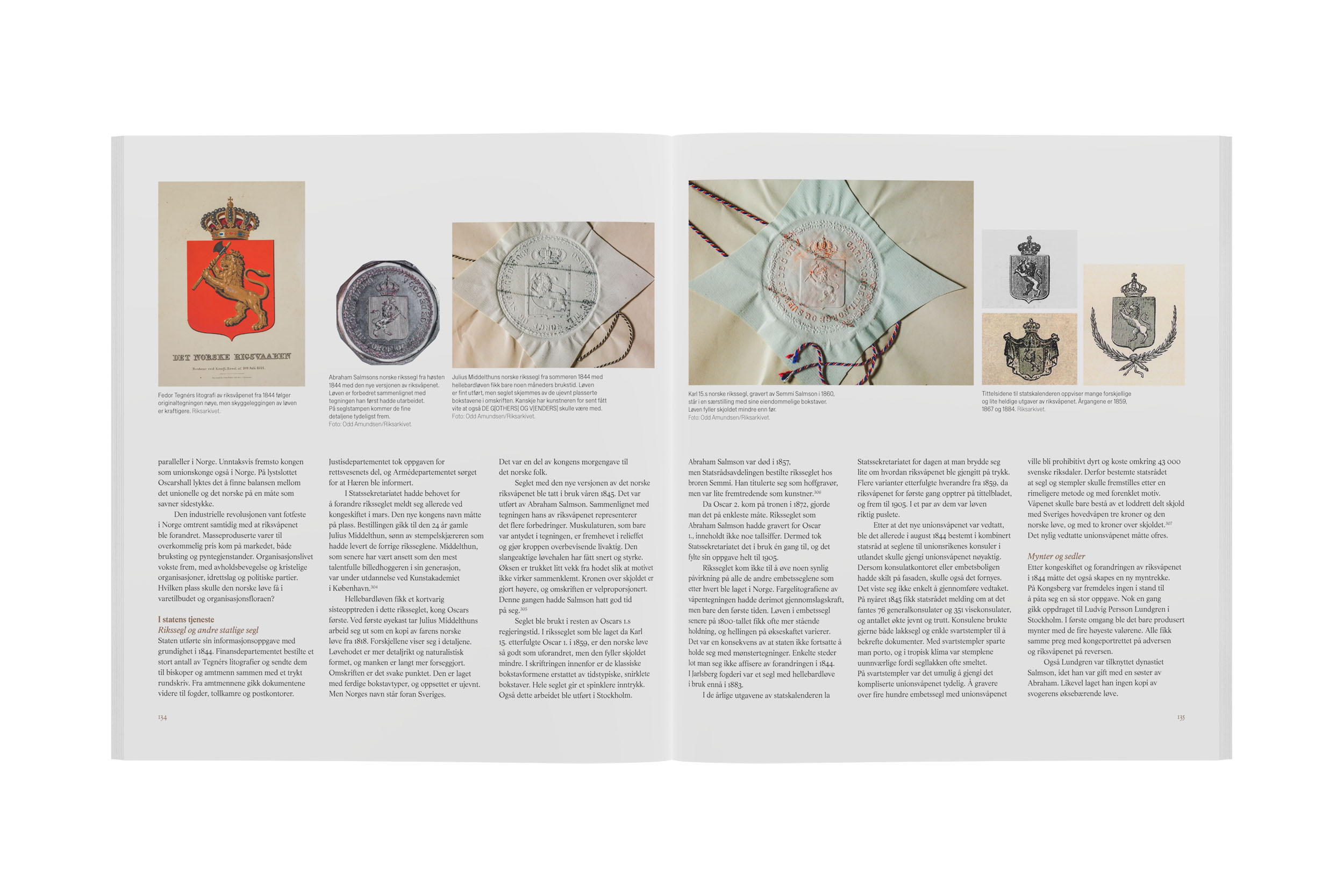
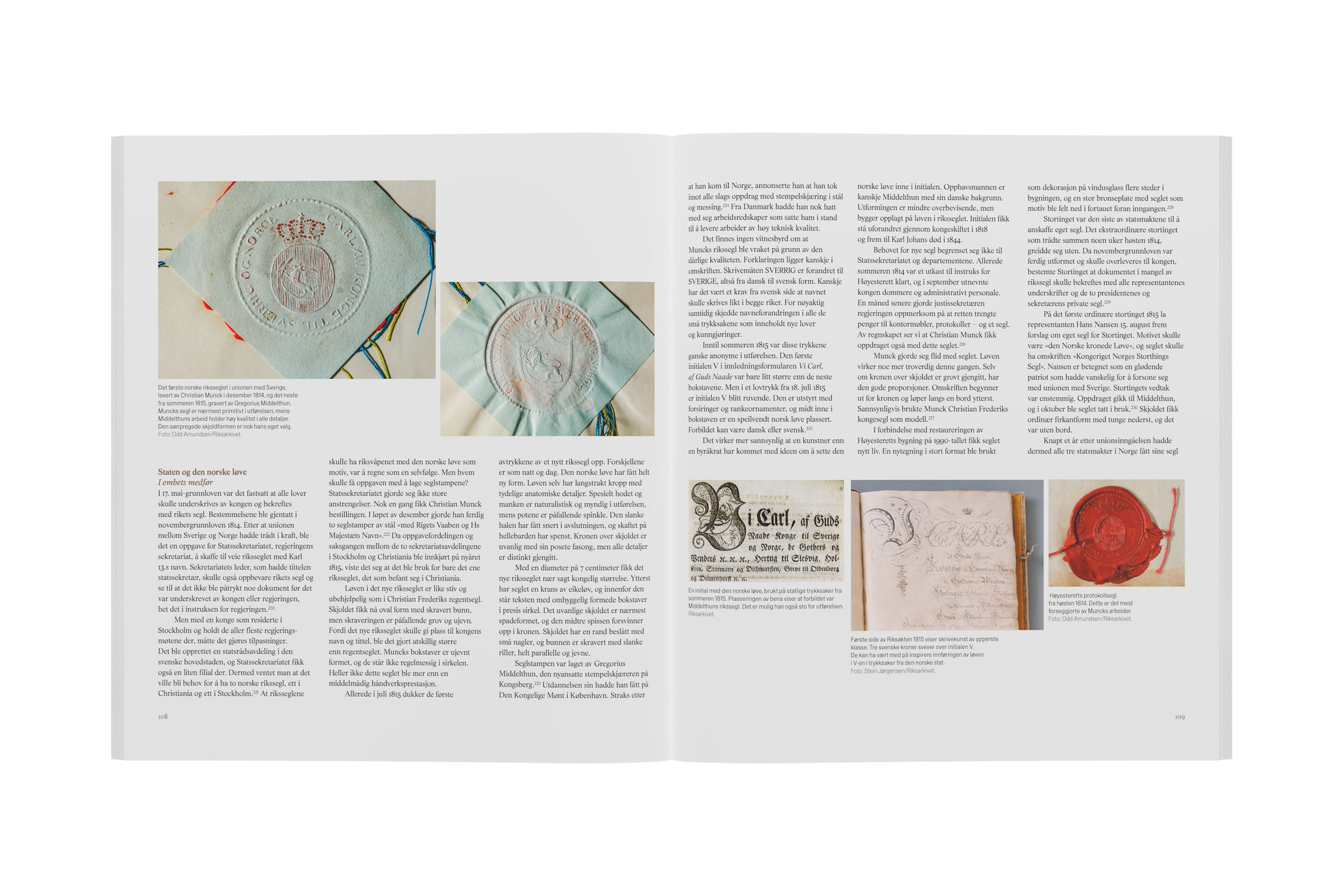
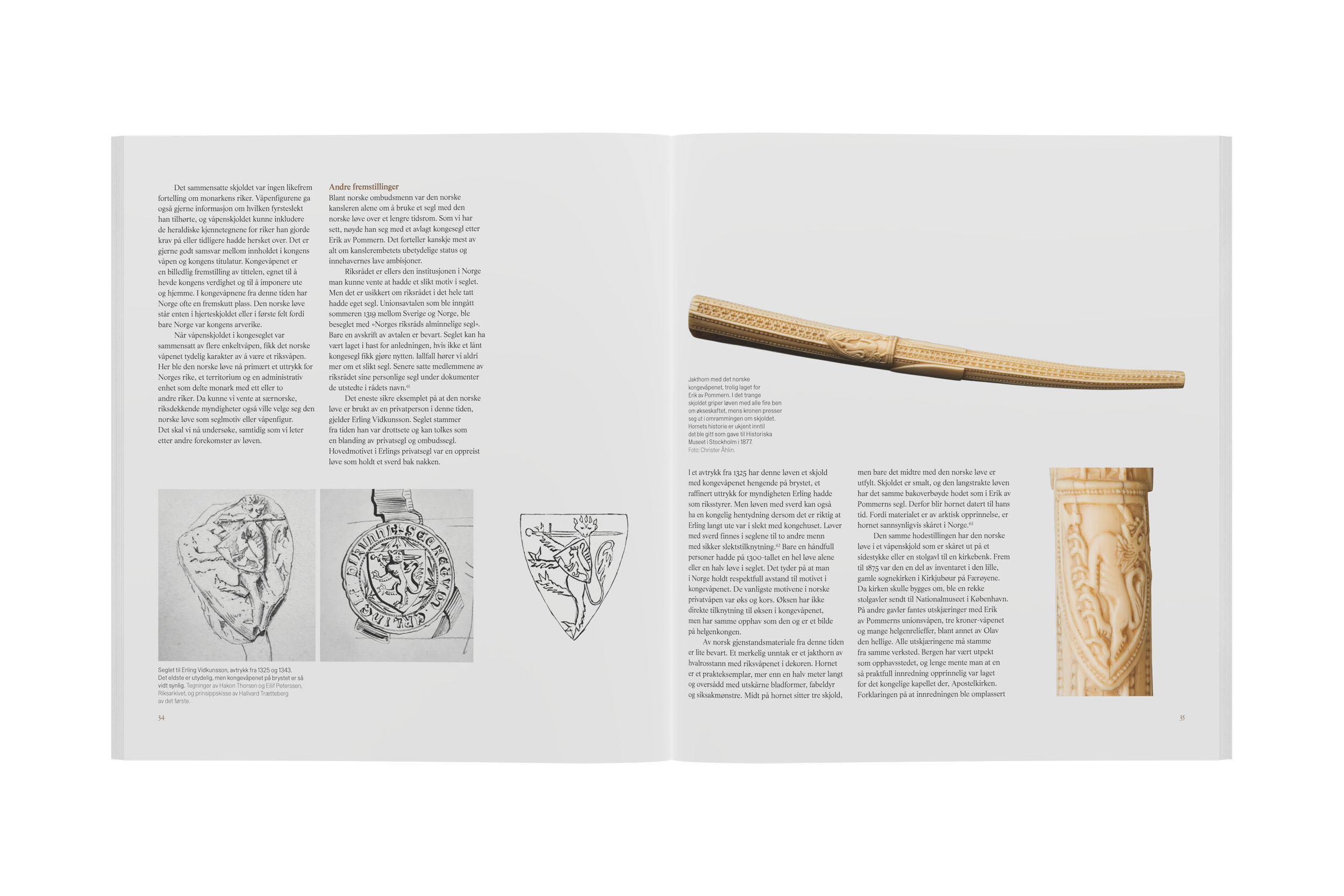
Why is Norway’s coat of arms a lion with an axe, and not a native Norwegian animal? Why can’t anyone and everyone use the coat of arms in the same way as the flag?
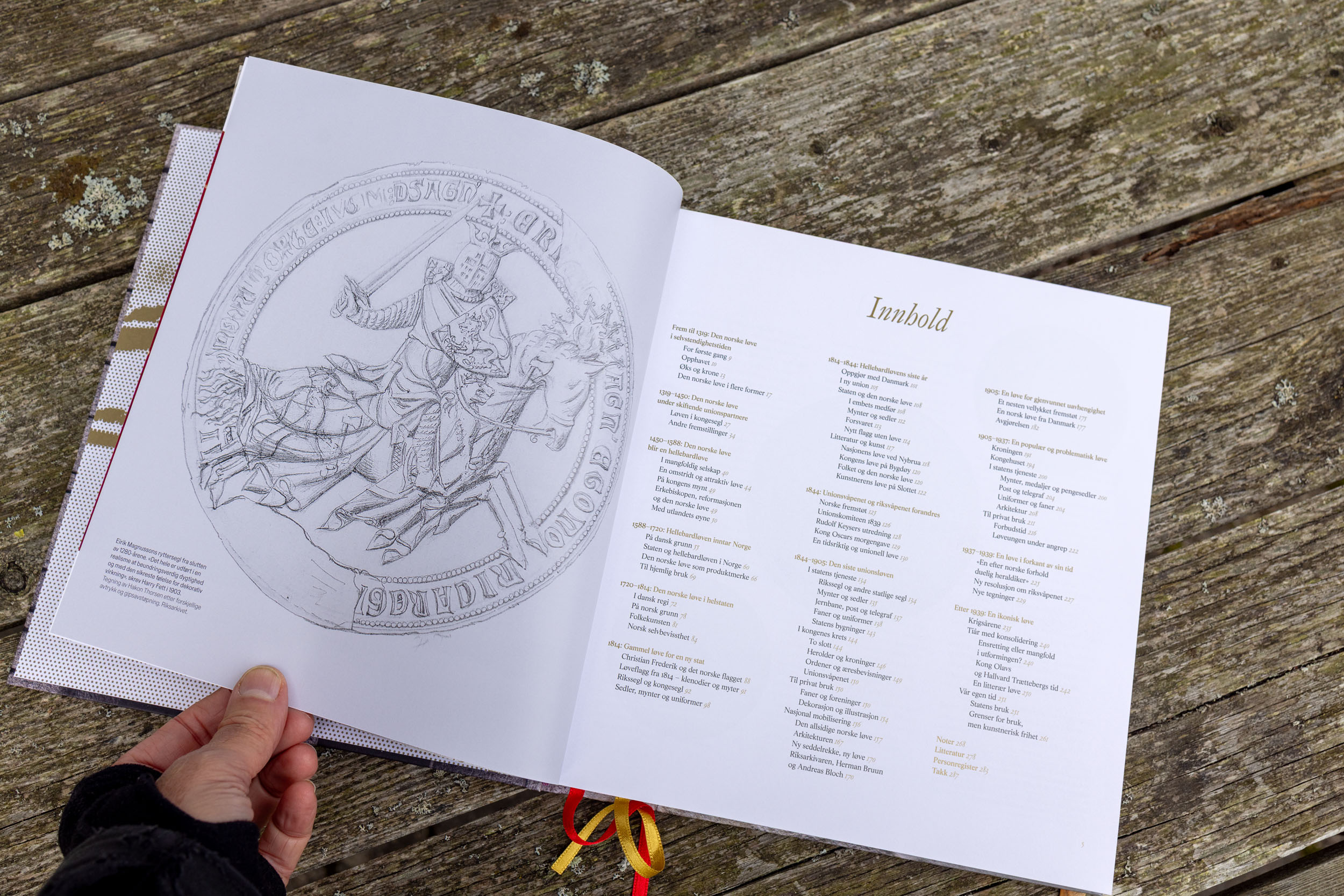
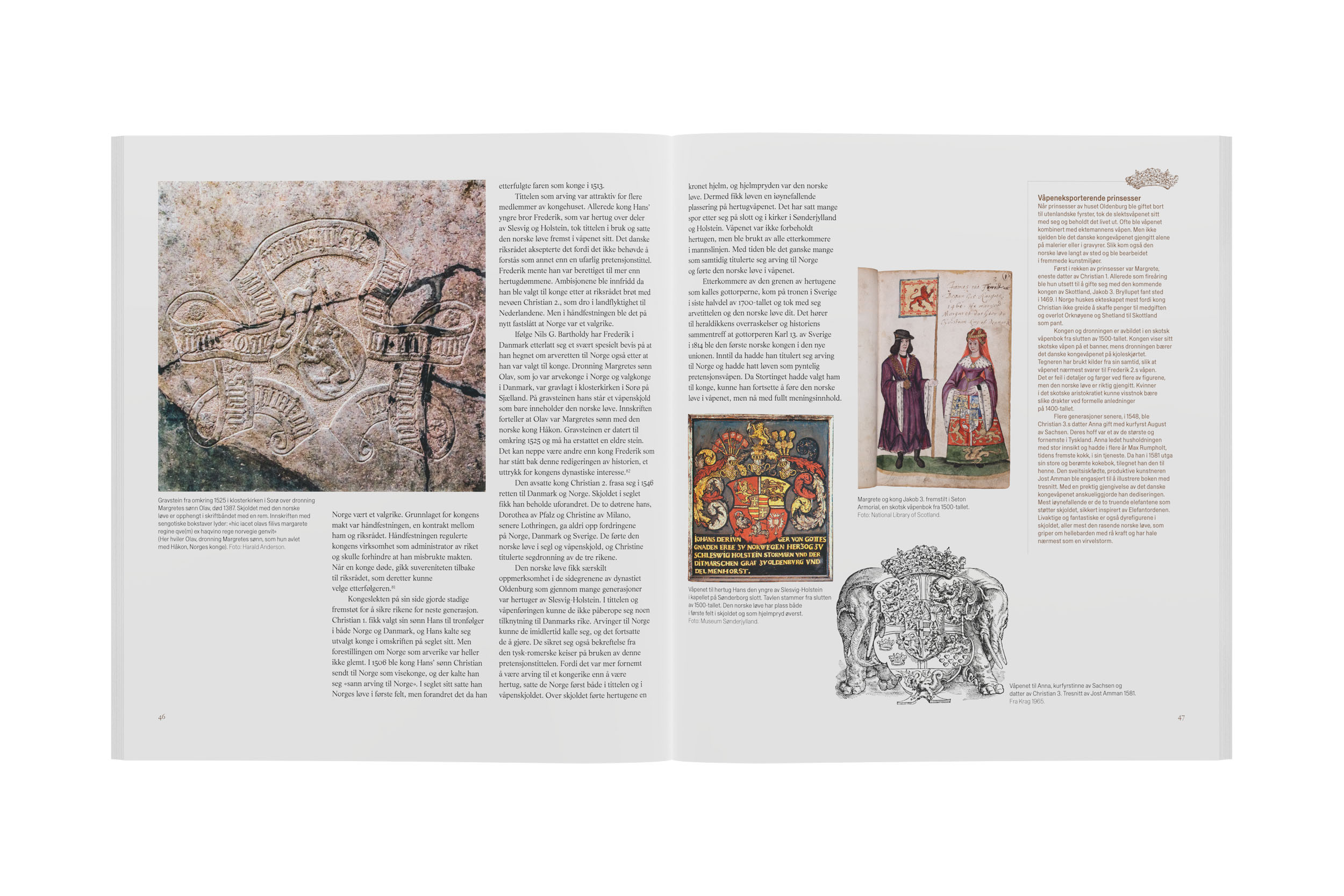
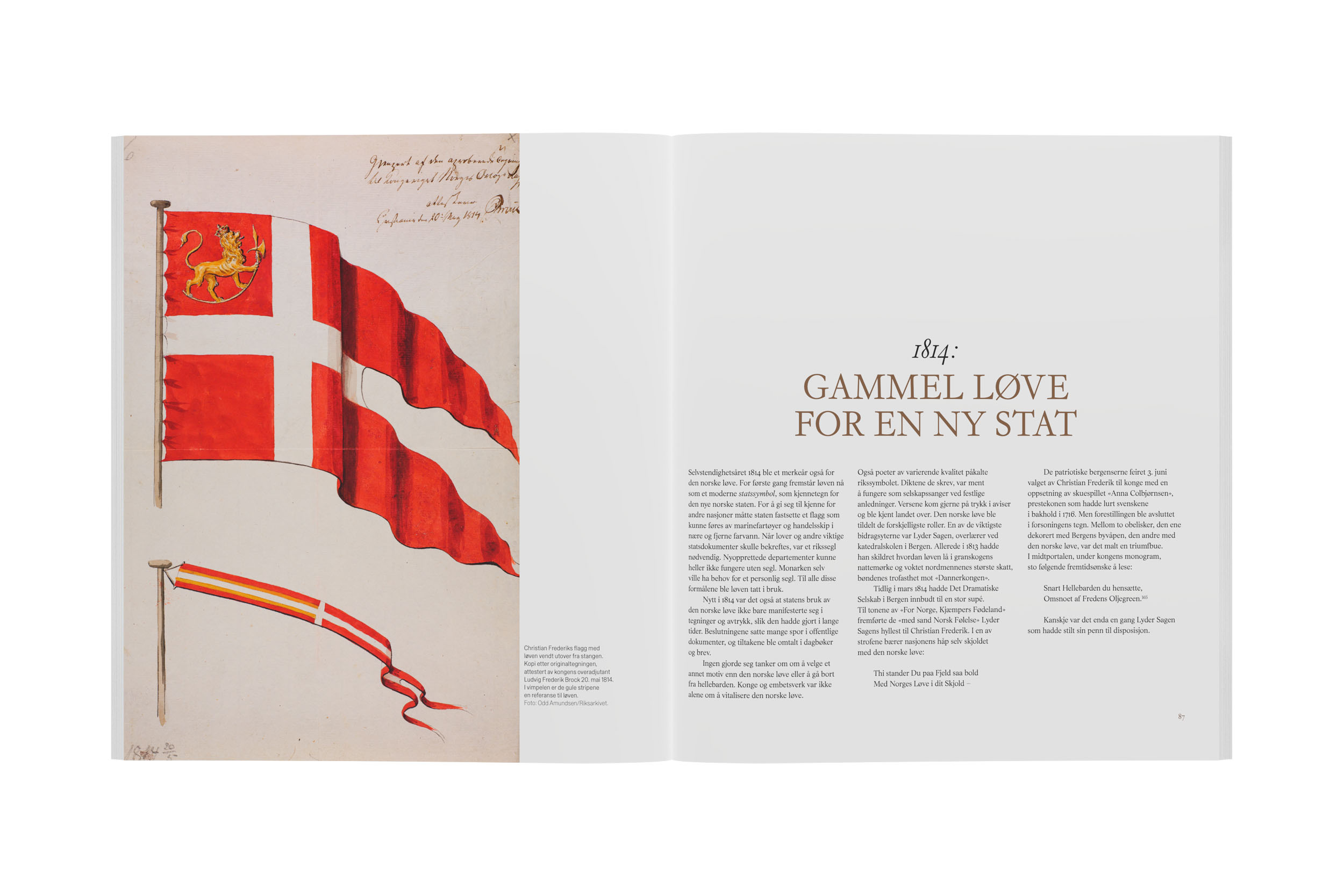
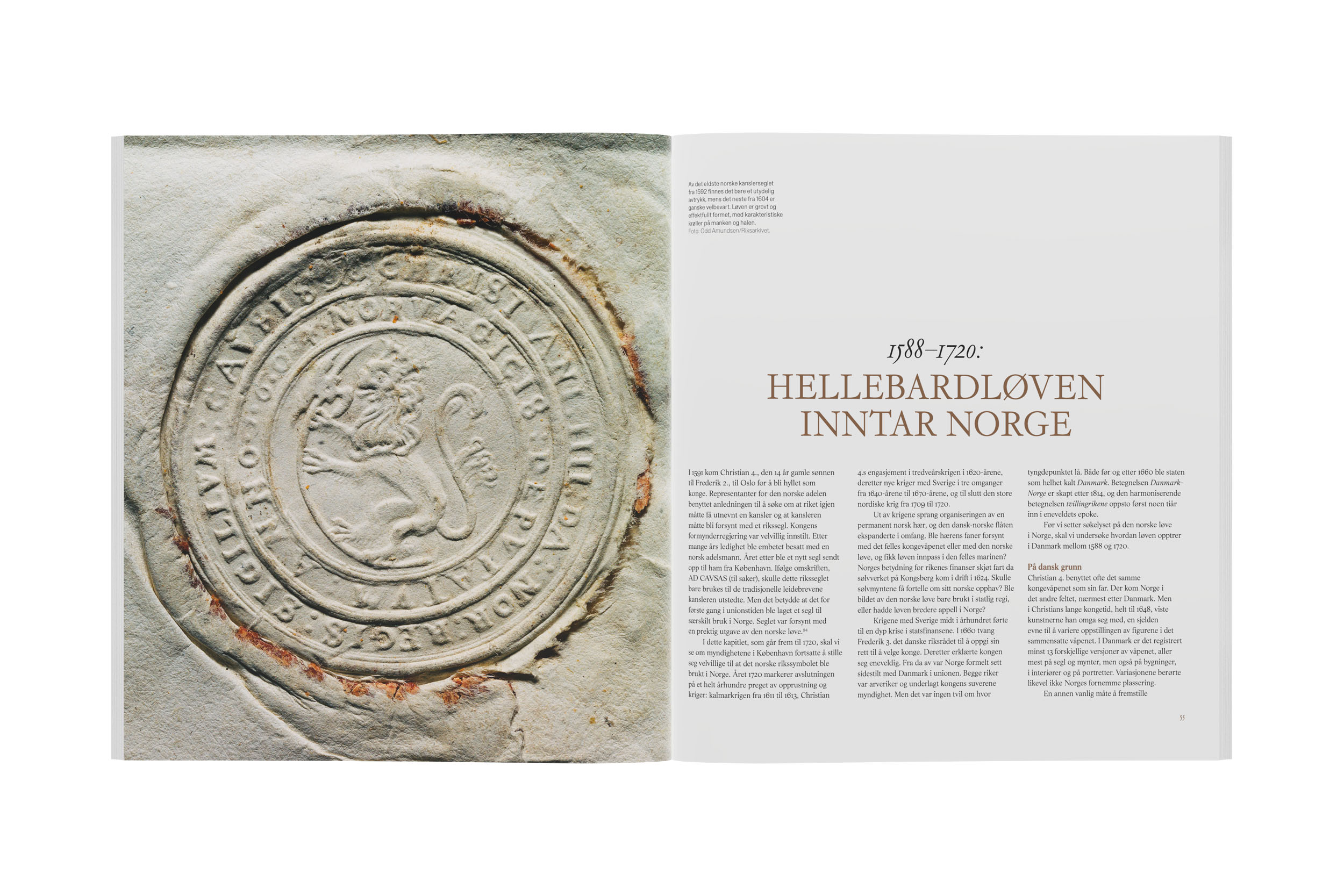
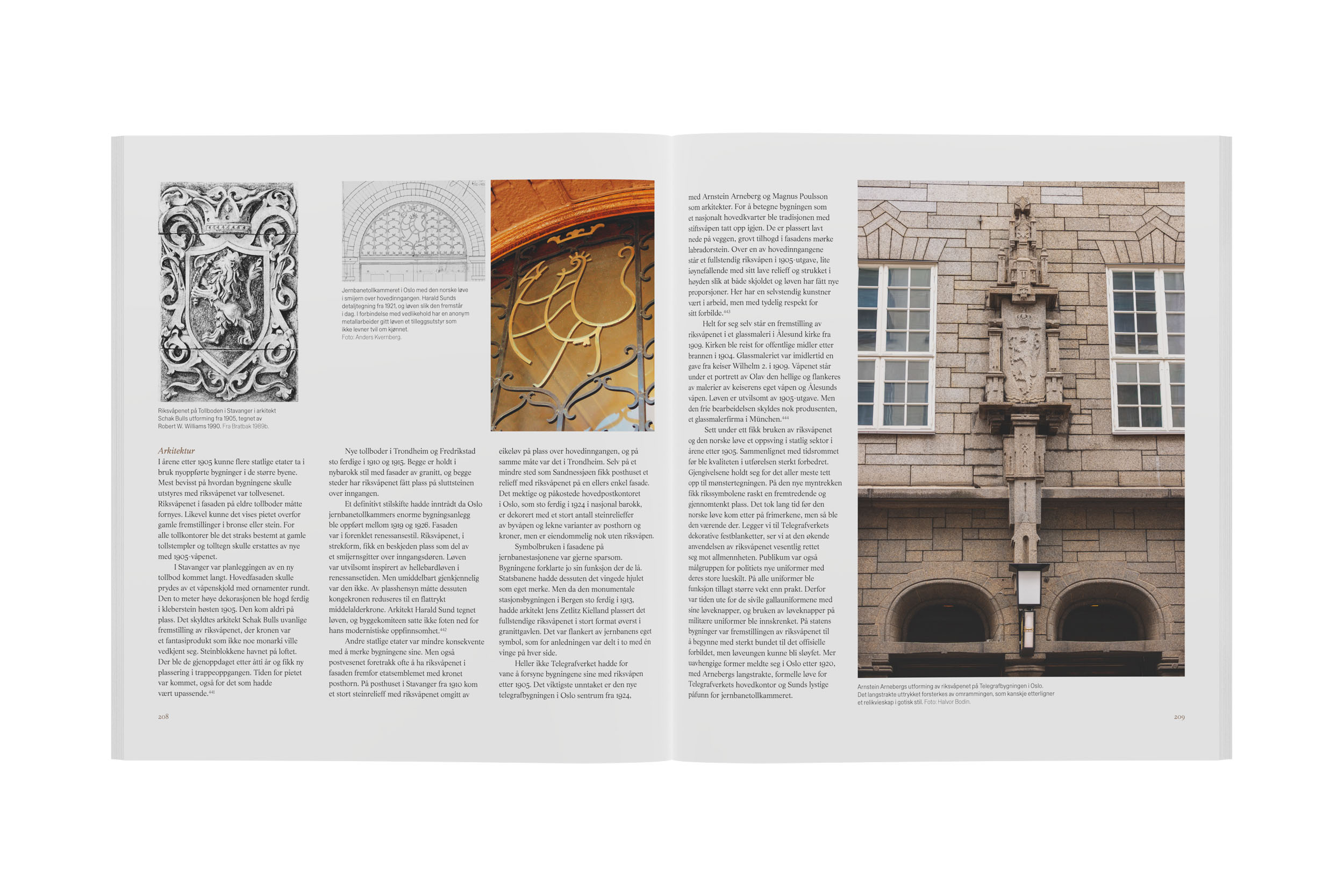
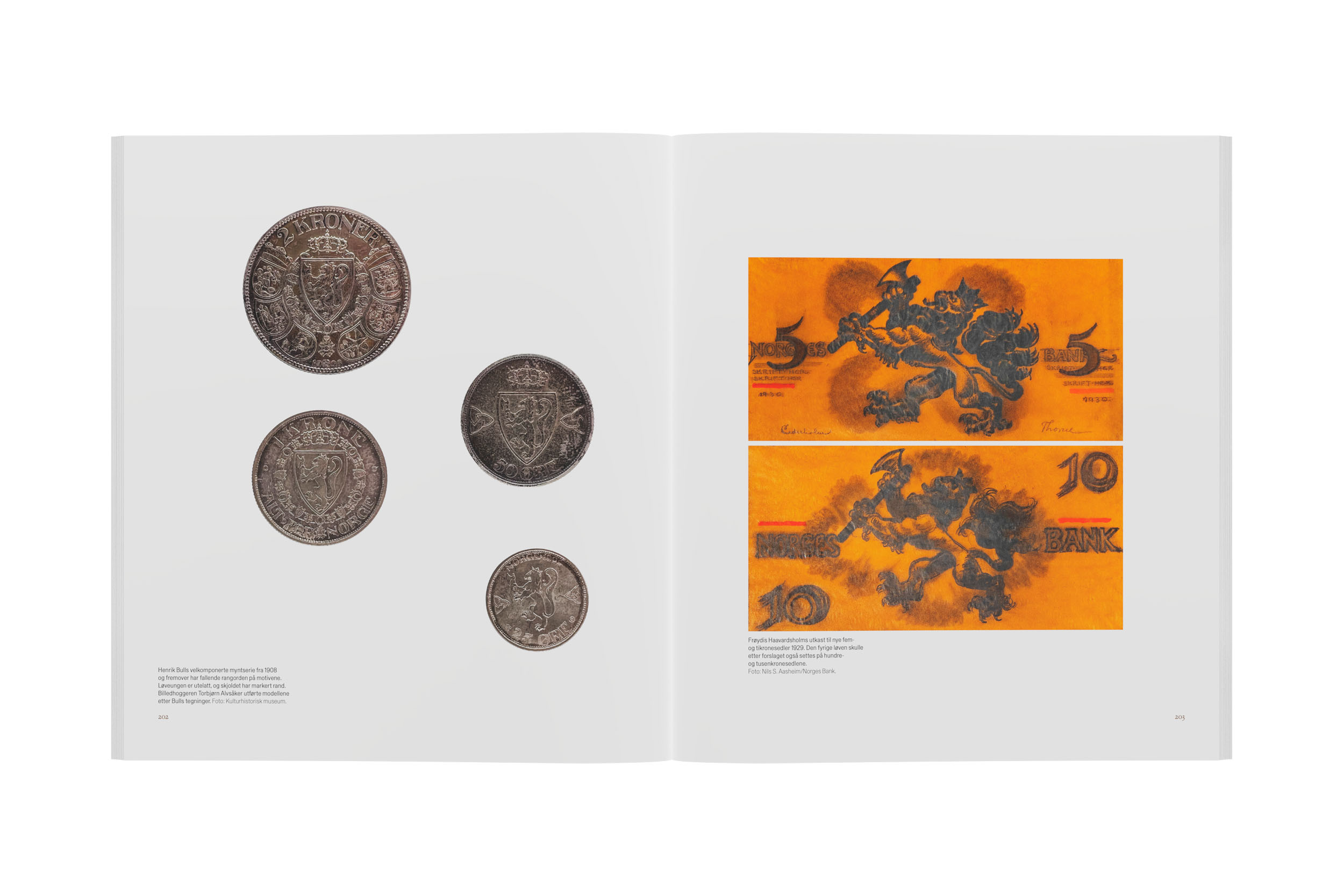
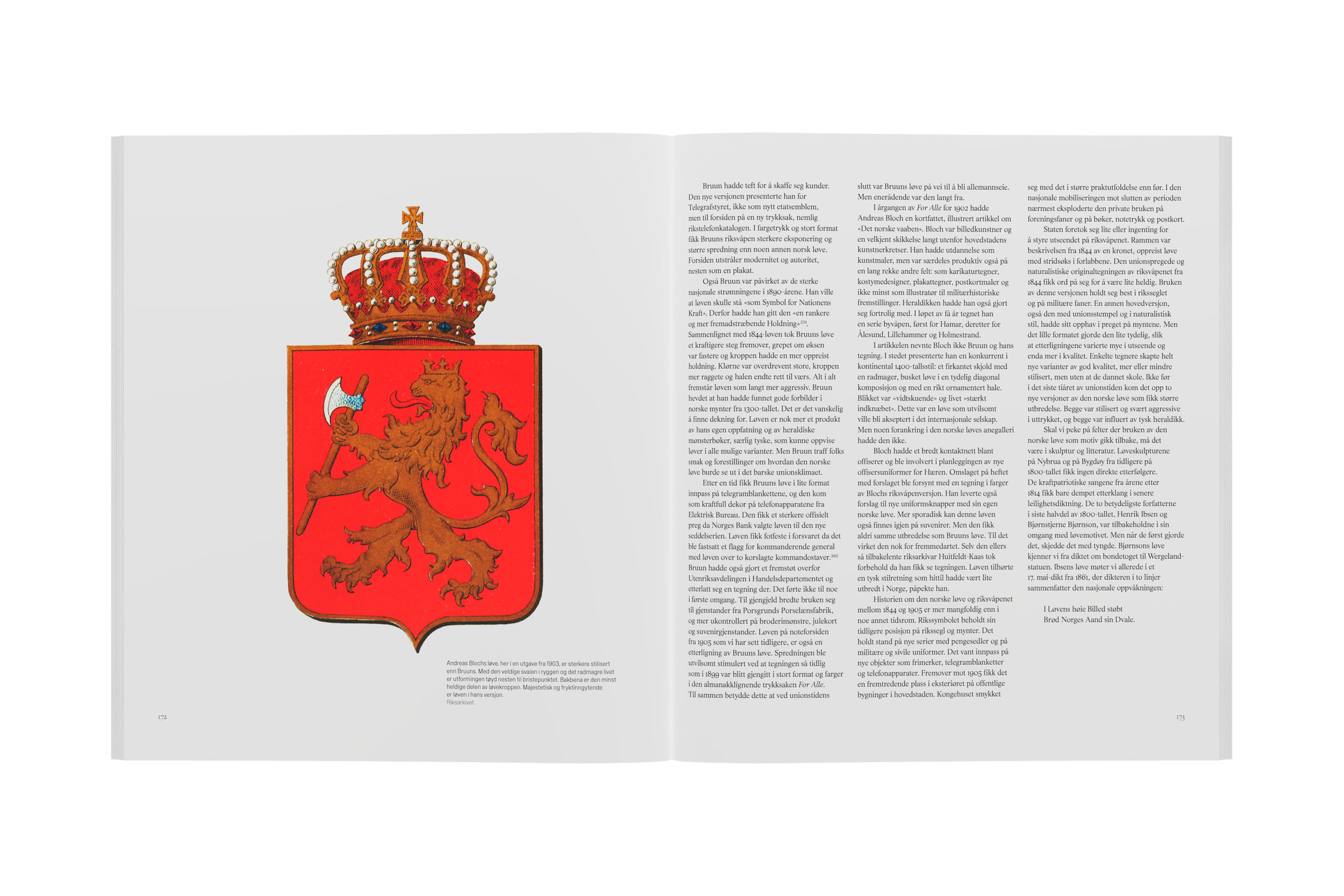
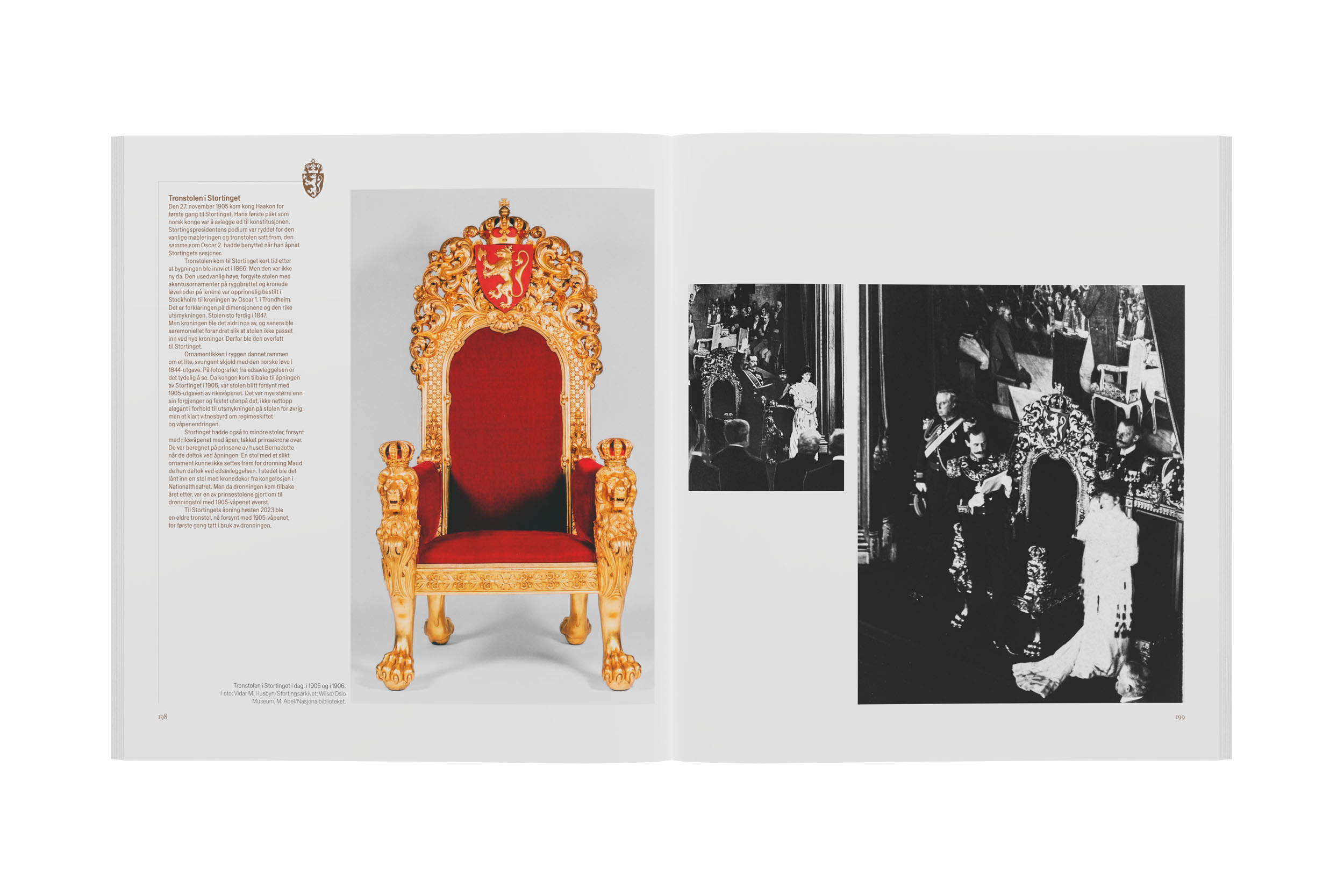
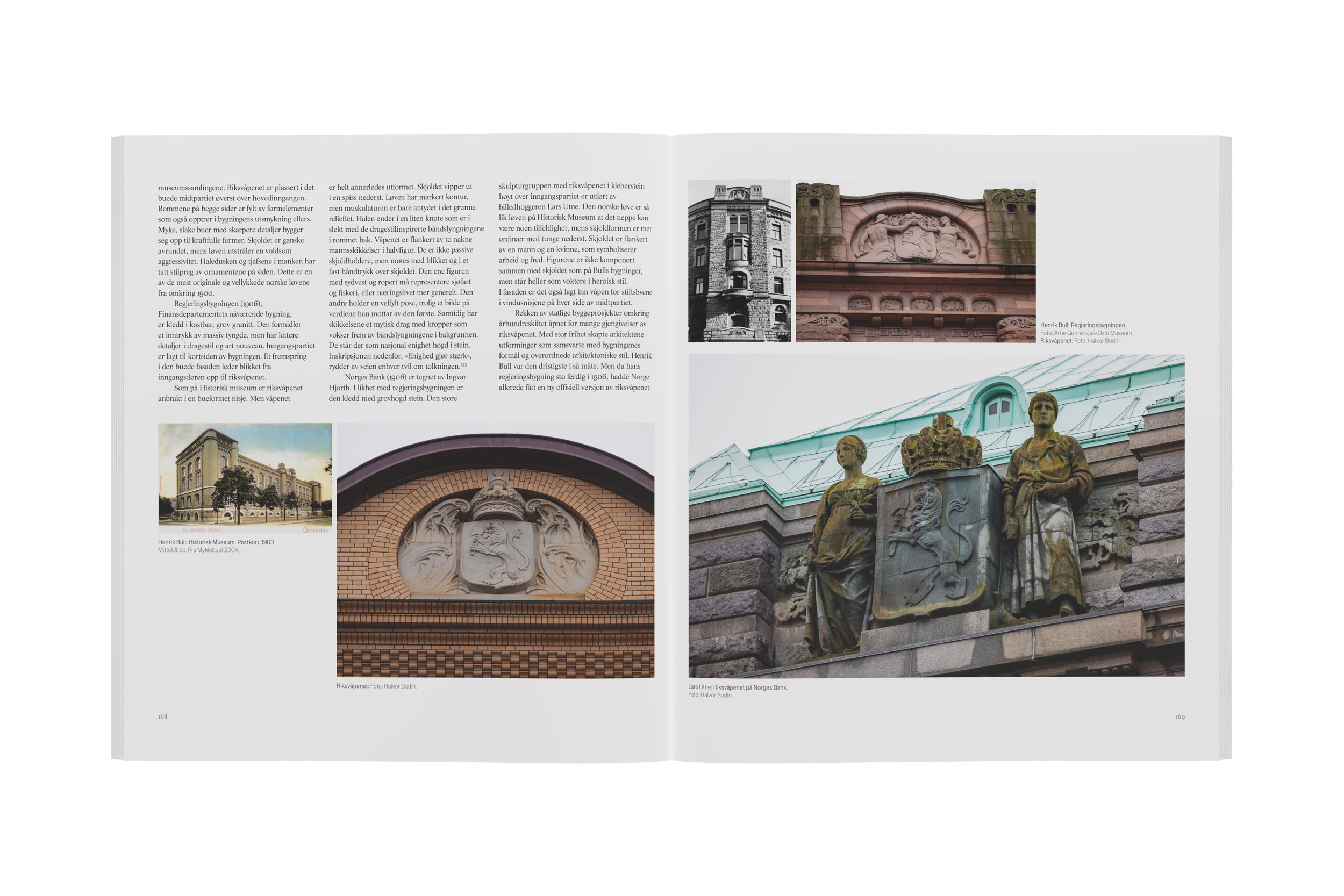
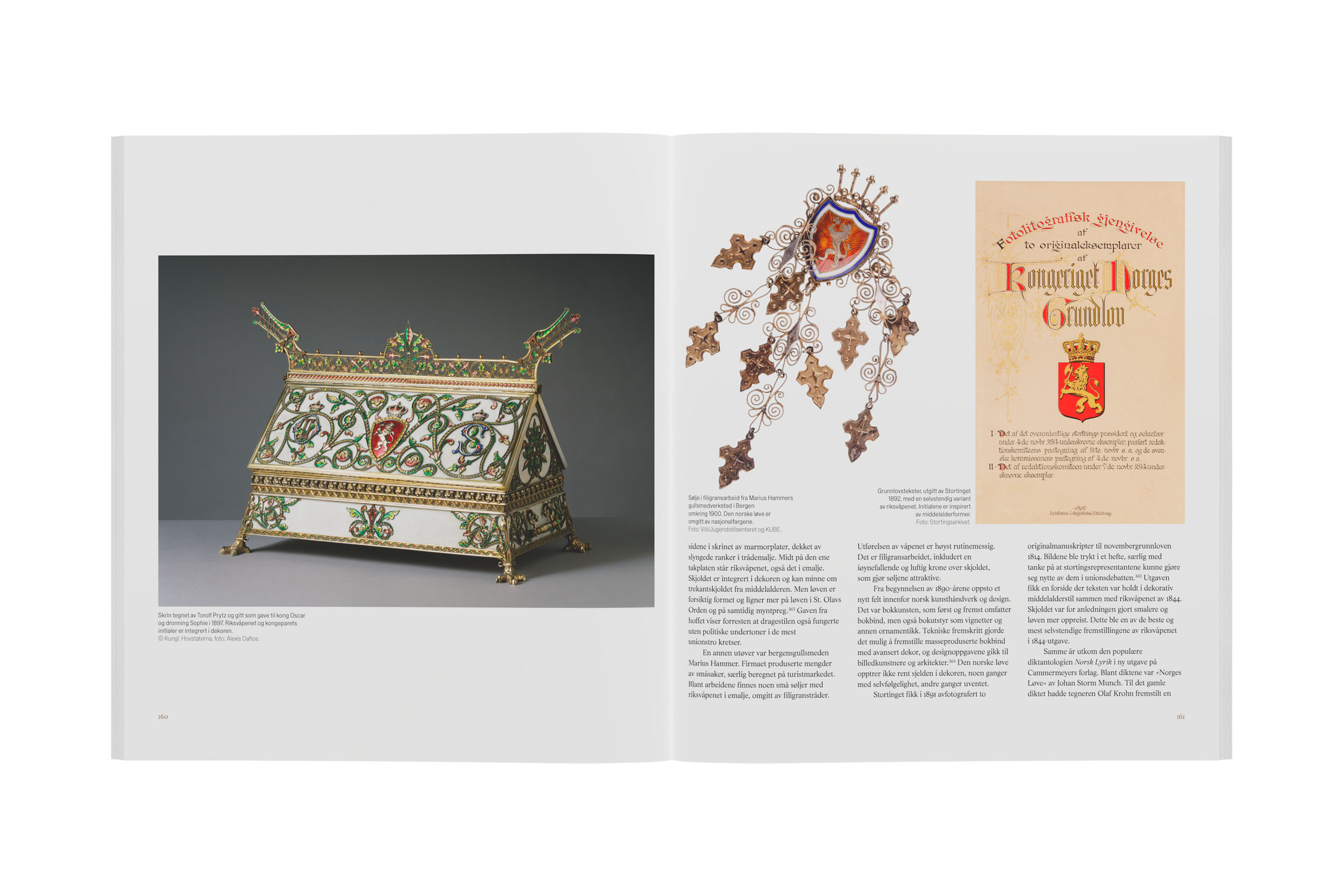
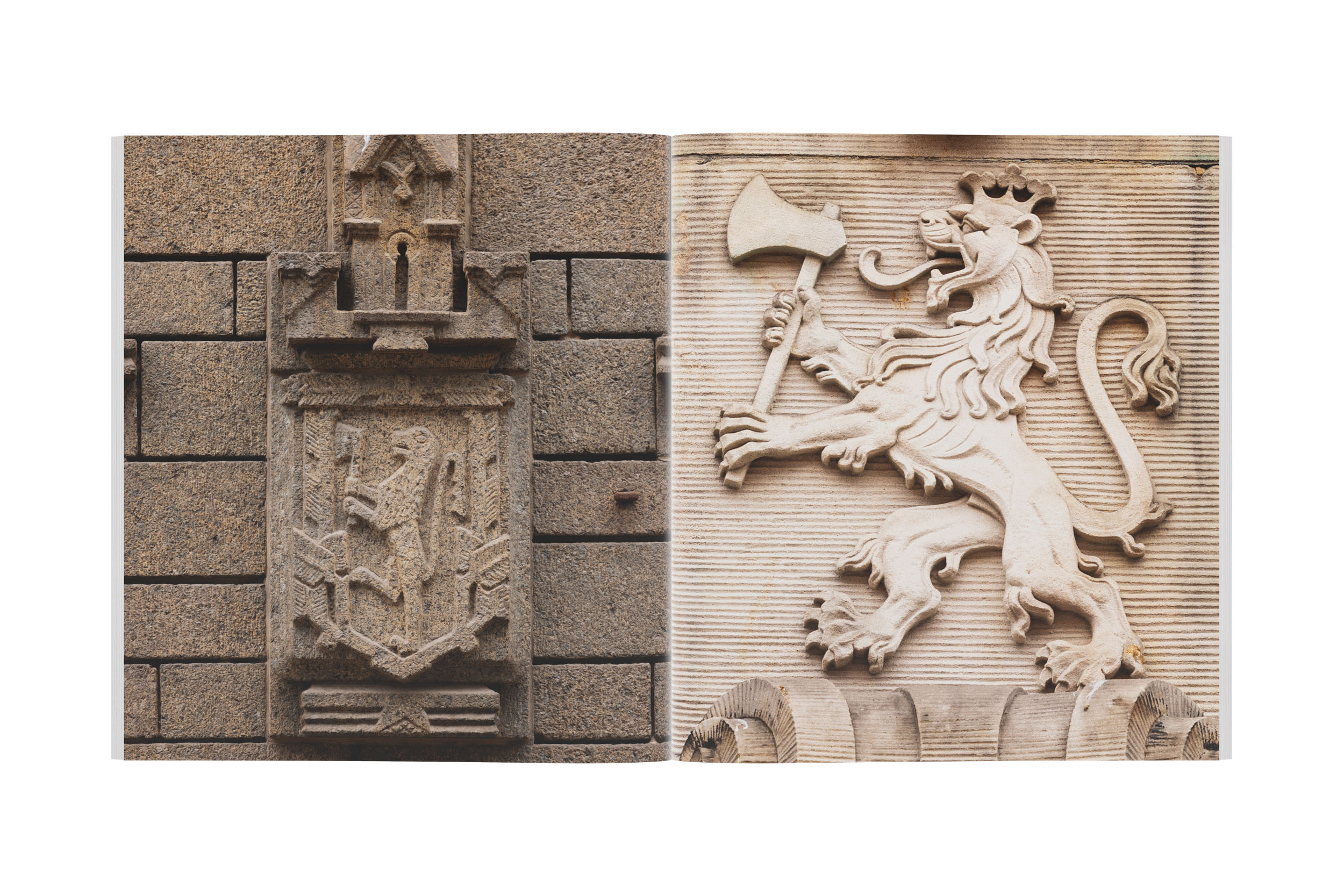
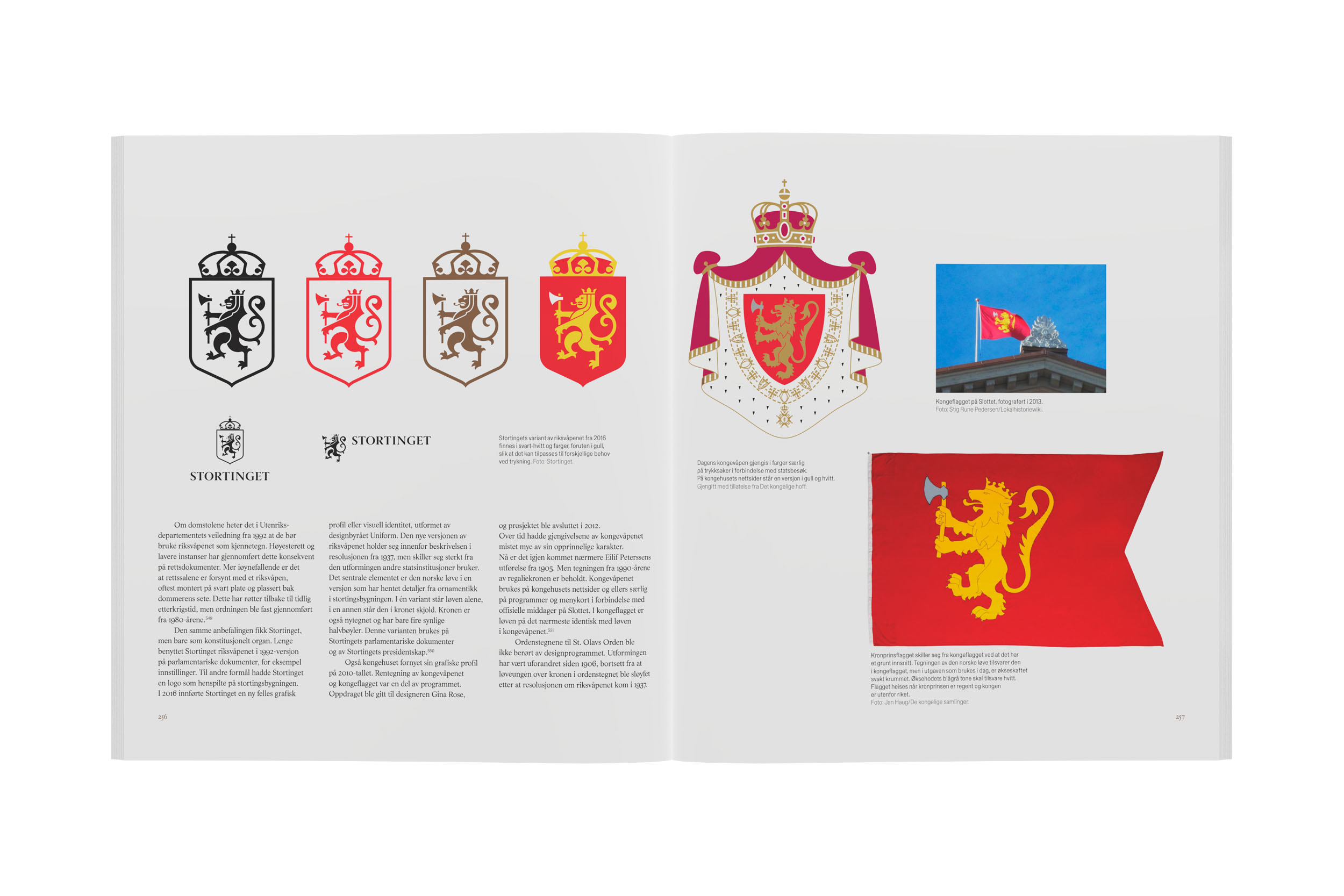
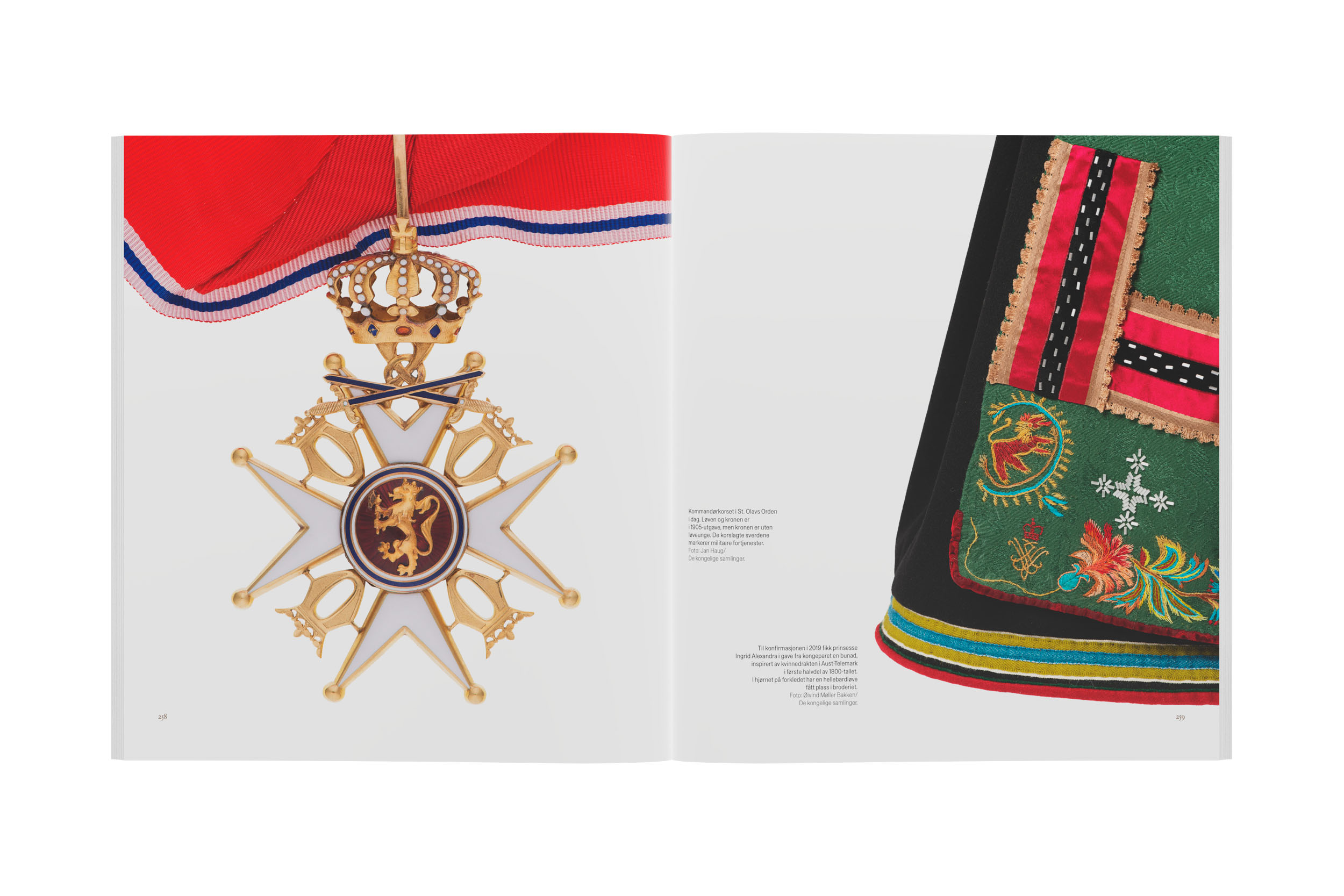
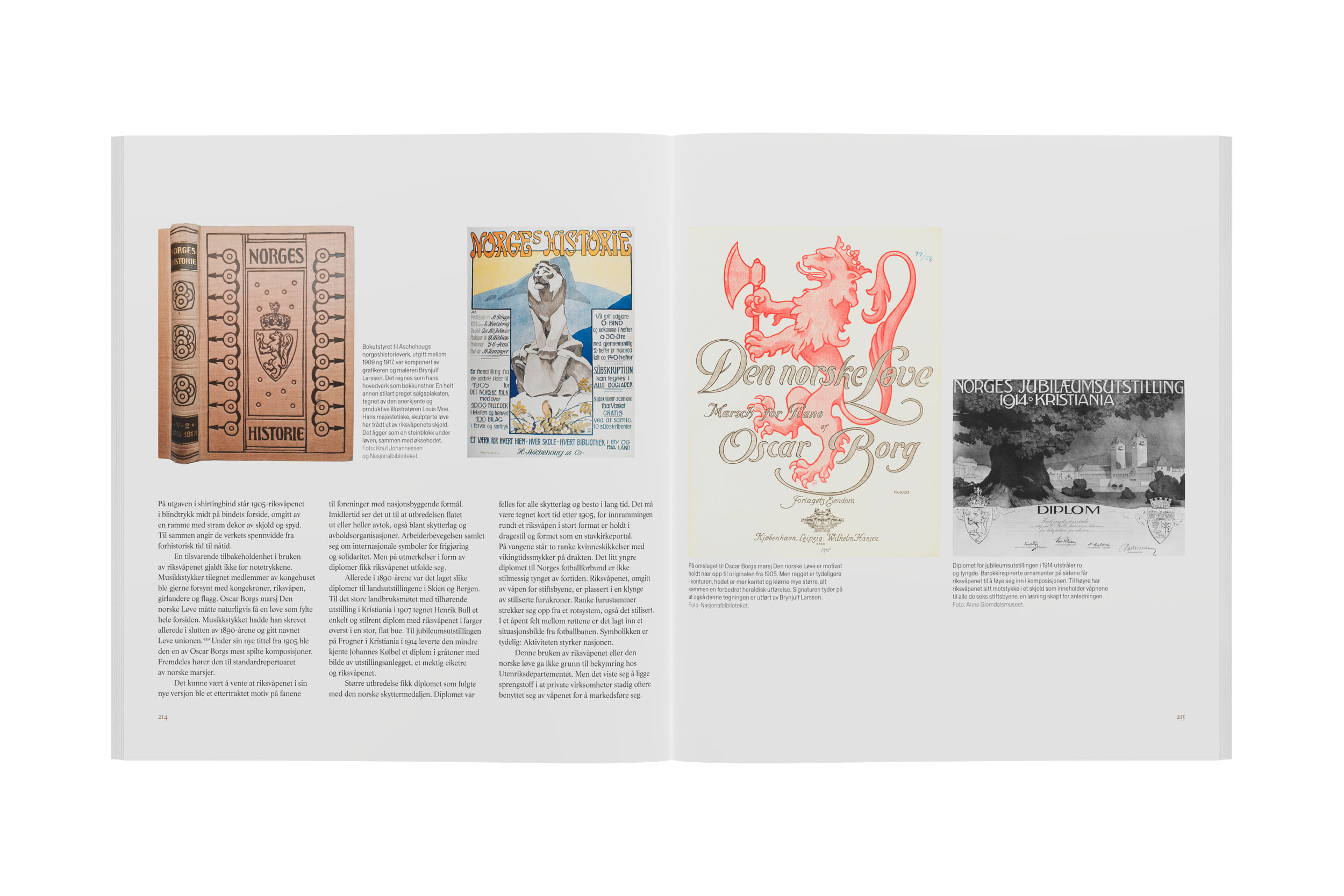
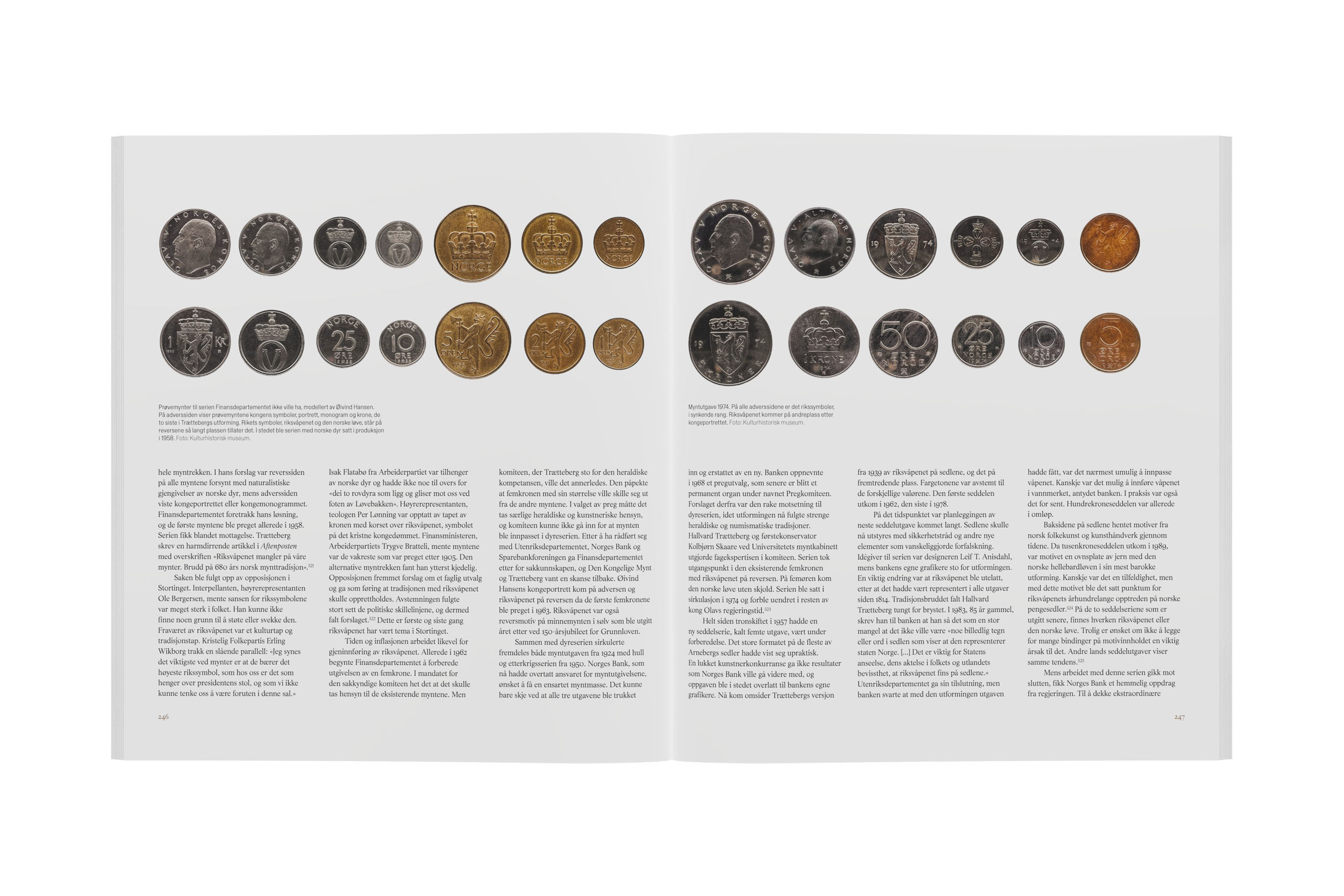
Historien om den norske løve tells how the coat of arms is used in our time. But above all, the account traces the long lines of history, all the way back to when the motif first appeared as a royal emblem in the 13th century. Through many centuries of unions, the lion had to relate to Danish and Swedish royal symbols and find its place within the union coats of arms. In key historical years such as 1814 and 1905, the Norwegian lion played a part in the political power struggle. During the Second World War, both the Quisling regime and the London government used the lion as their emblem. The Norwegian lion has left its mark on a rich visual tradition.
We encounter the lion on coins, banknotes, and stamps; in church decorations; on cast-iron stoves and glass goblets; and on cupboards and chests in folk art. It appears on military uniforms and banners, on bookbindings and sheet music, in digital design programmes, and of course on the royal standard.
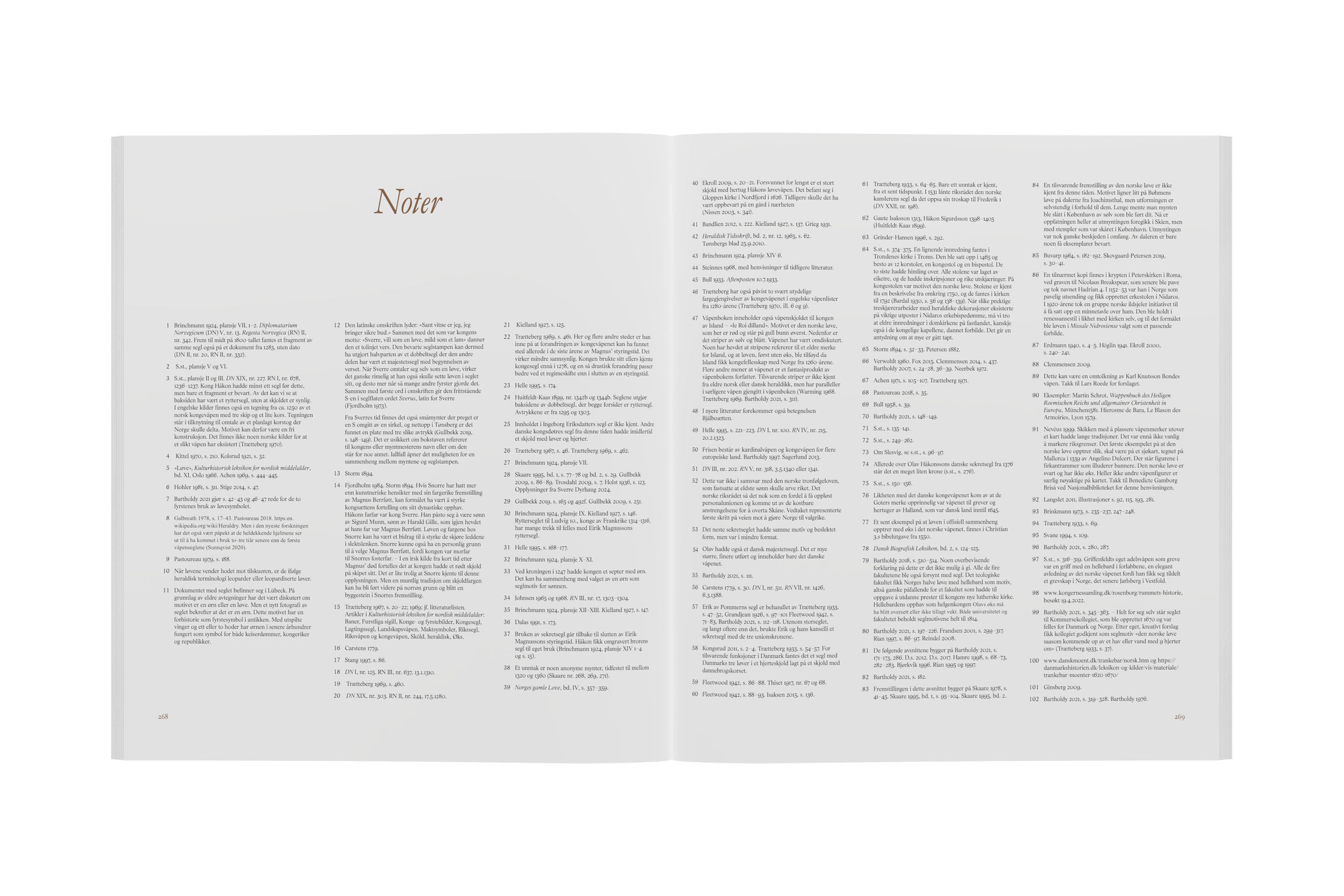
The book presents an extensive and largely unknown collection of images.
The author, Knut Johannessen, is a historian and former Head of Department at the National Archives of Norway.
© Orfeus Publishing & Knut Johannessen
Author: Knut Johannessen
Publishing editor: Inger Schjoldager
Picture Editor: Knut Johannessen
Design/repro: Halvor Bodin
Photography: Credited in captions
Front cover photo: Arnstein Arneberg’s design of the coat of arms on the Telegraph Building in Oslo. Photo: Halvor Bodin
Orfeus Publishing
View all projects with Orfeus Publishing here.
2025
248 x 272 mm
288 pages
ISBN 978-82-93959-20-5
Livonia Print SIA, 2025, Latvia
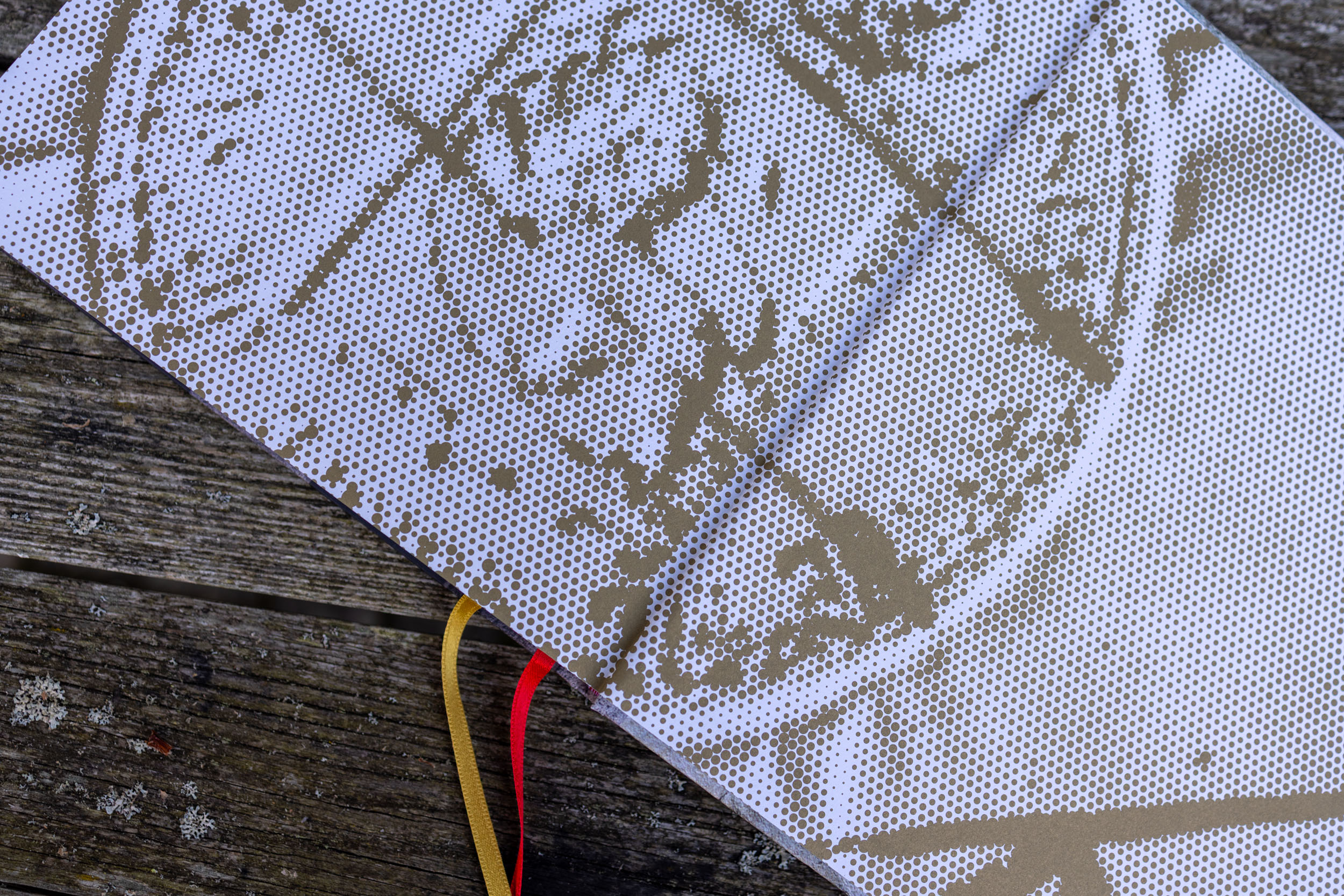
Paper: Arctic Matt 150 g/m²
Endpapers: Munken Lynx 150 g/m²
Book jacket: Geltex 11 LS
Typography: Store Norske Leif Regular 9/13 pkt., Store Norske Gangster, Store Norske Skandia Condensed
Language: Norwegian
CMYK + Pantone 871 (gold)
The publication has received support from the Bergesen Foundation, the Fund for Danish-Norwegian Cooperation, the Arts Council Norway, and Societas Heraldica Scandinavica.
The author has received support from the Norwegian Non-Fiction Writers and Translators Association.
More documentation photos to come.
248 x 272 mm
288 pages
ISBN 978-82-93959-20-5
Livonia Print SIA, 2025, Latvia
Paper: Arctic Matt 150 g/m²
Endpapers: Munken Lynx 150 g/m²
Book jacket: Geltex 11 LS
Typography: Store Norske Leif Regular 9/13 pkt., Store Norske Gangster, Store Norske Skandia Condensed
Language: Norwegian
CMYK + Pantone 871 (gold)
The publication has received support from the Bergesen Foundation, the Fund for Danish-Norwegian Cooperation, the Arts Council Norway, and Societas Heraldica Scandinavica.
The author has received support from the Norwegian Non-Fiction Writers and Translators Association.
More documentation photos to come.
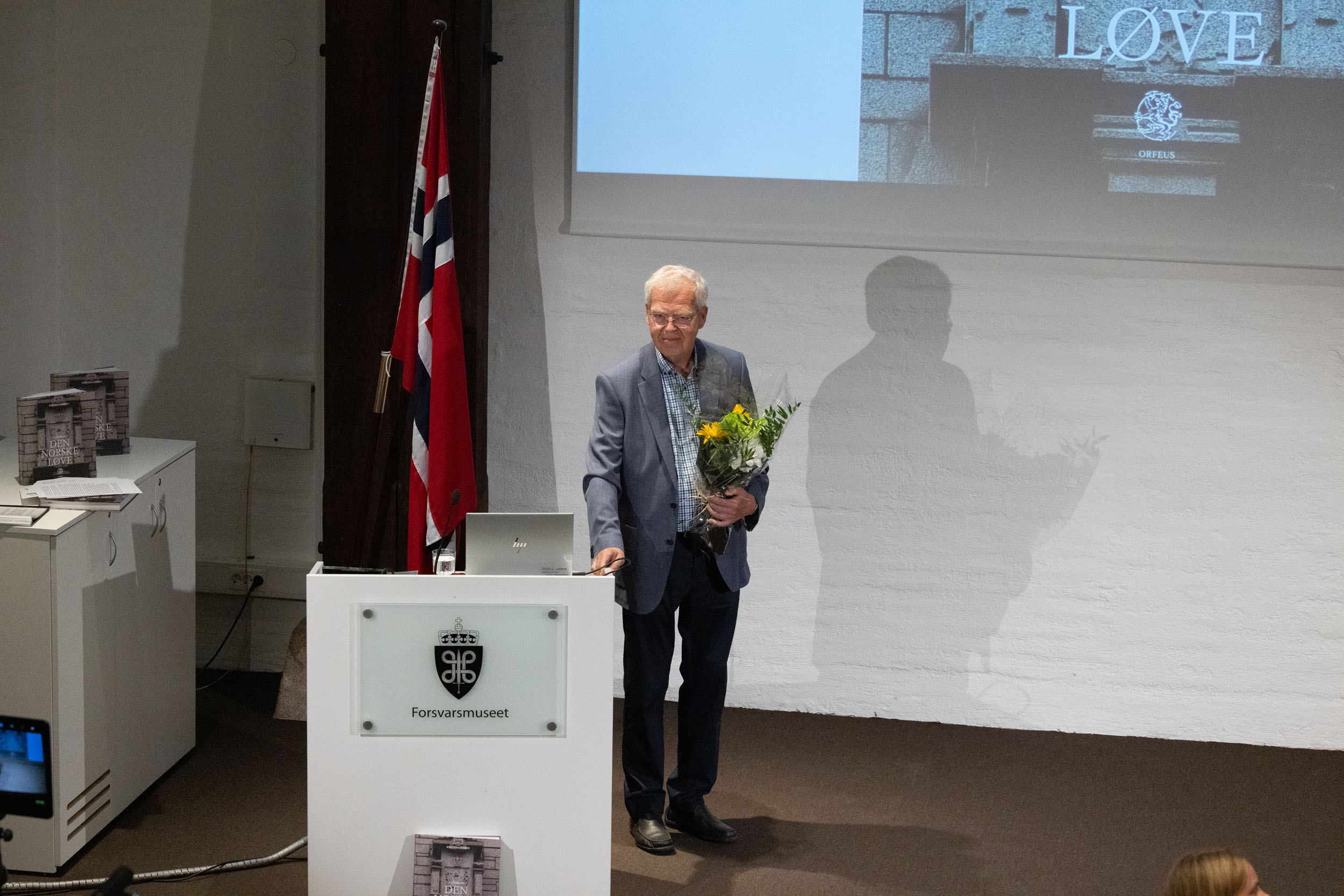
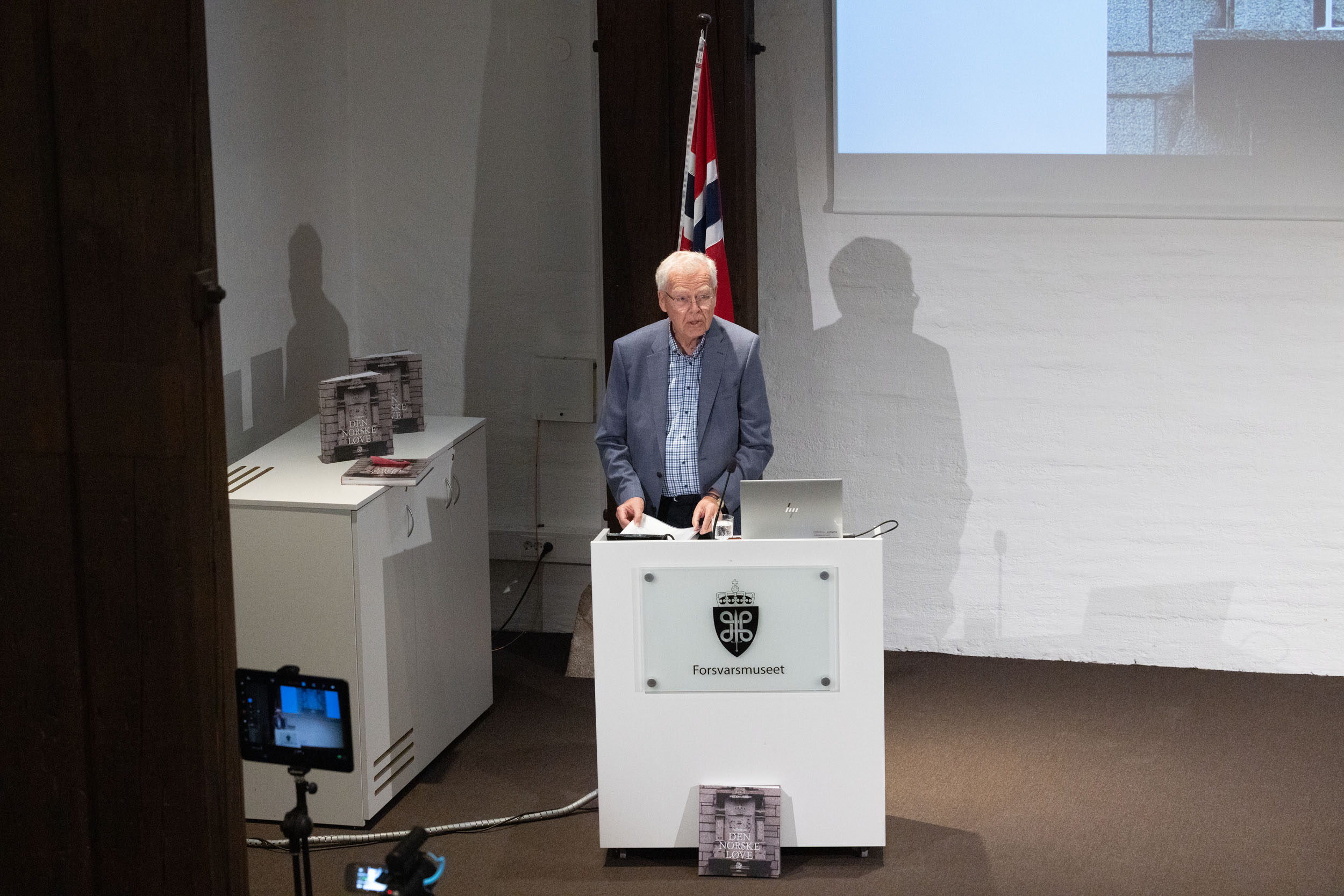
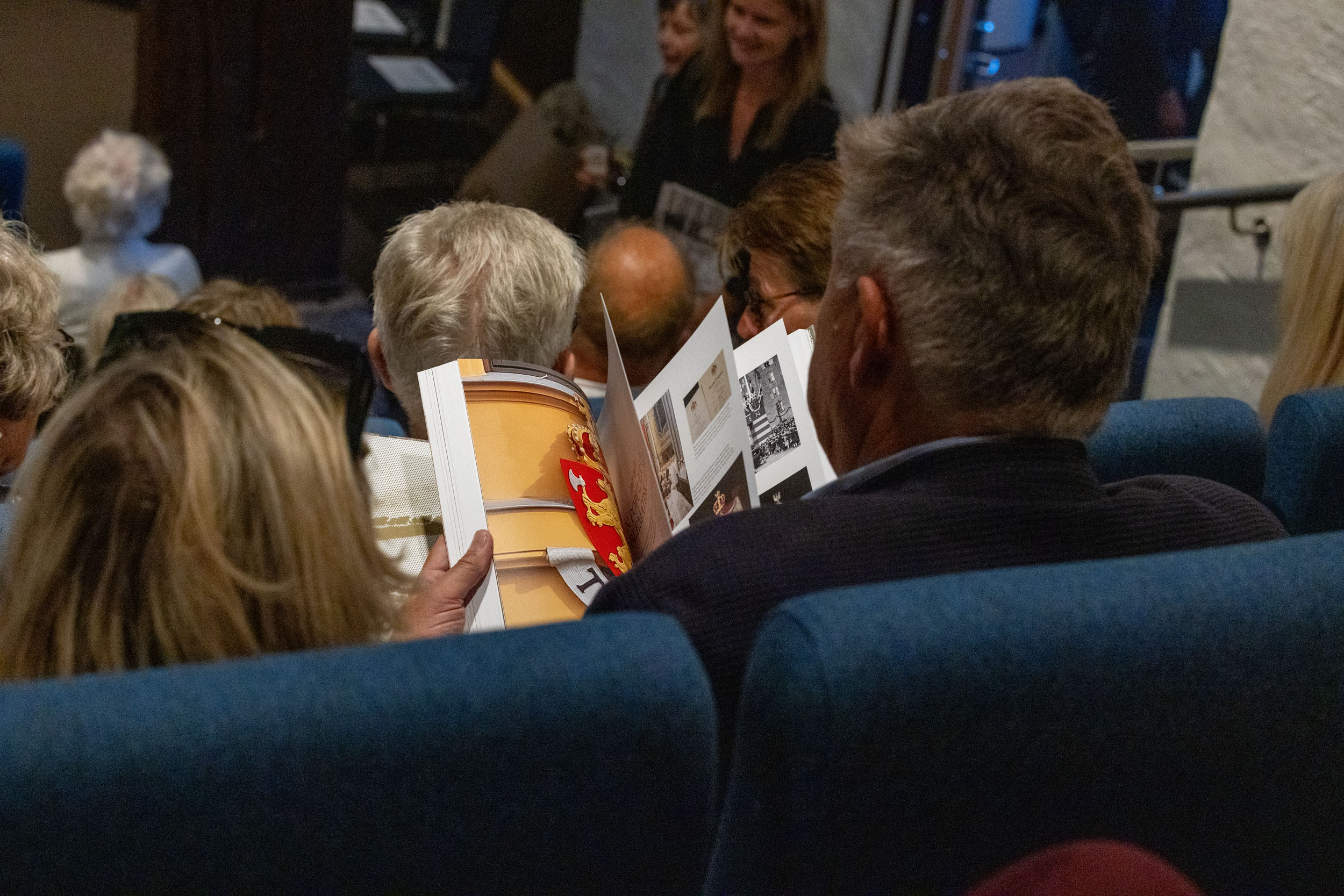

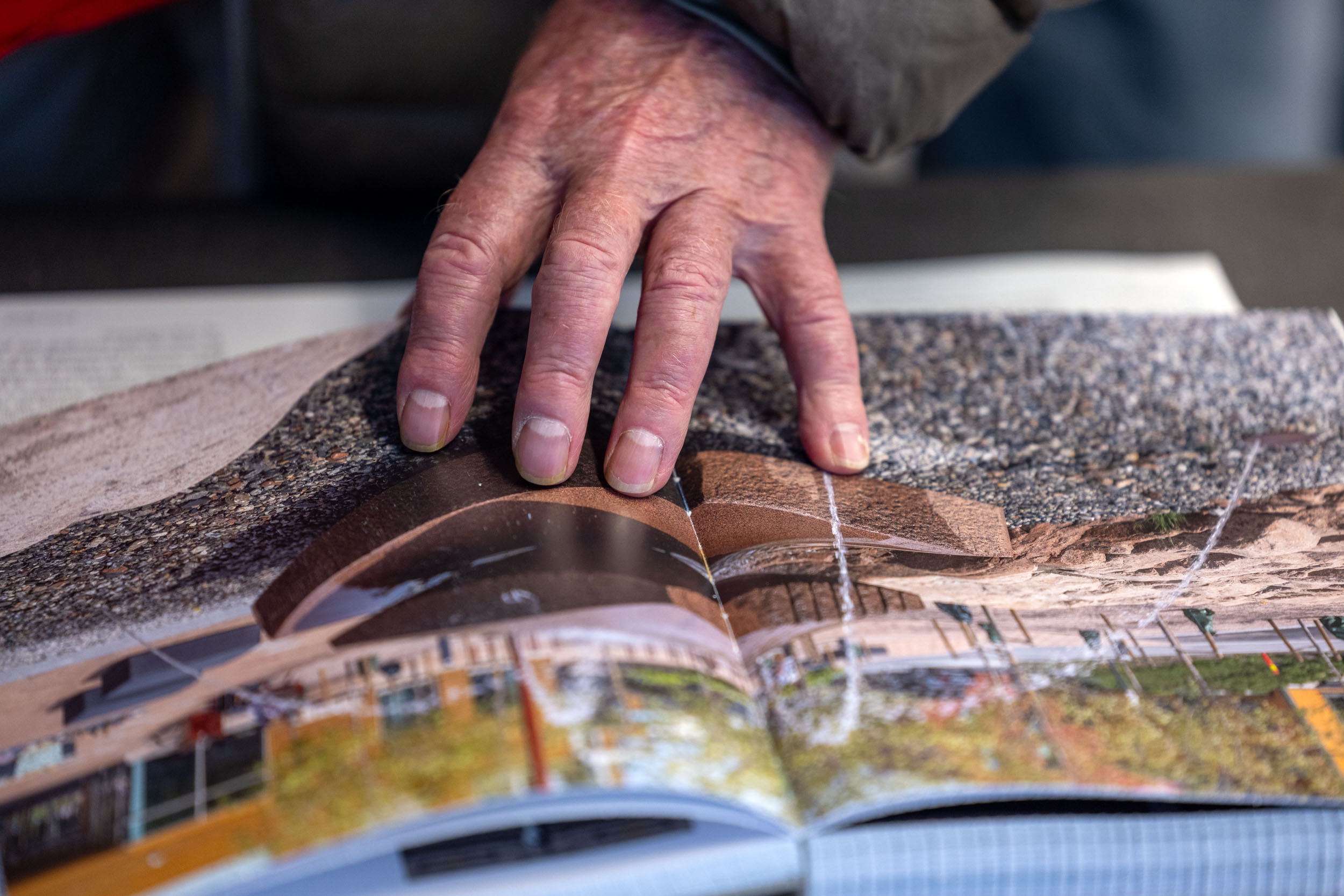
Kristian Blystad
Known for his distinctive monumental works in stone, such as Torso (1999) in the former government quarter, Reclining Head II – Dream at Filipstad Brygge (1999), and The Sailing King (1993), a monument in memory of King Olav V at Hankø. He played a significant role in collaboration with Snøhetta on architectural projects such as the Bibliotheca Alexandrina and the Oslo Opera House roof.
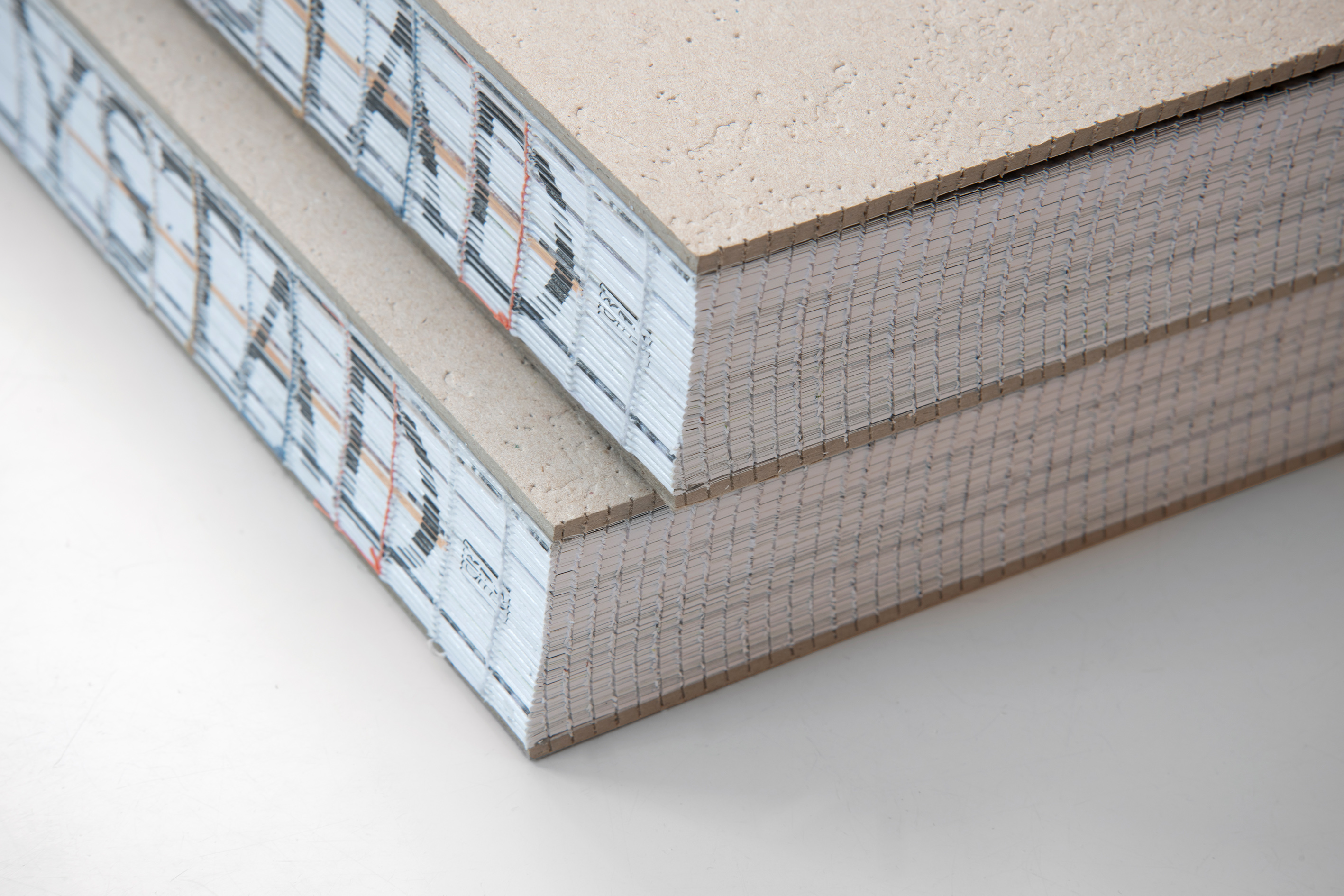
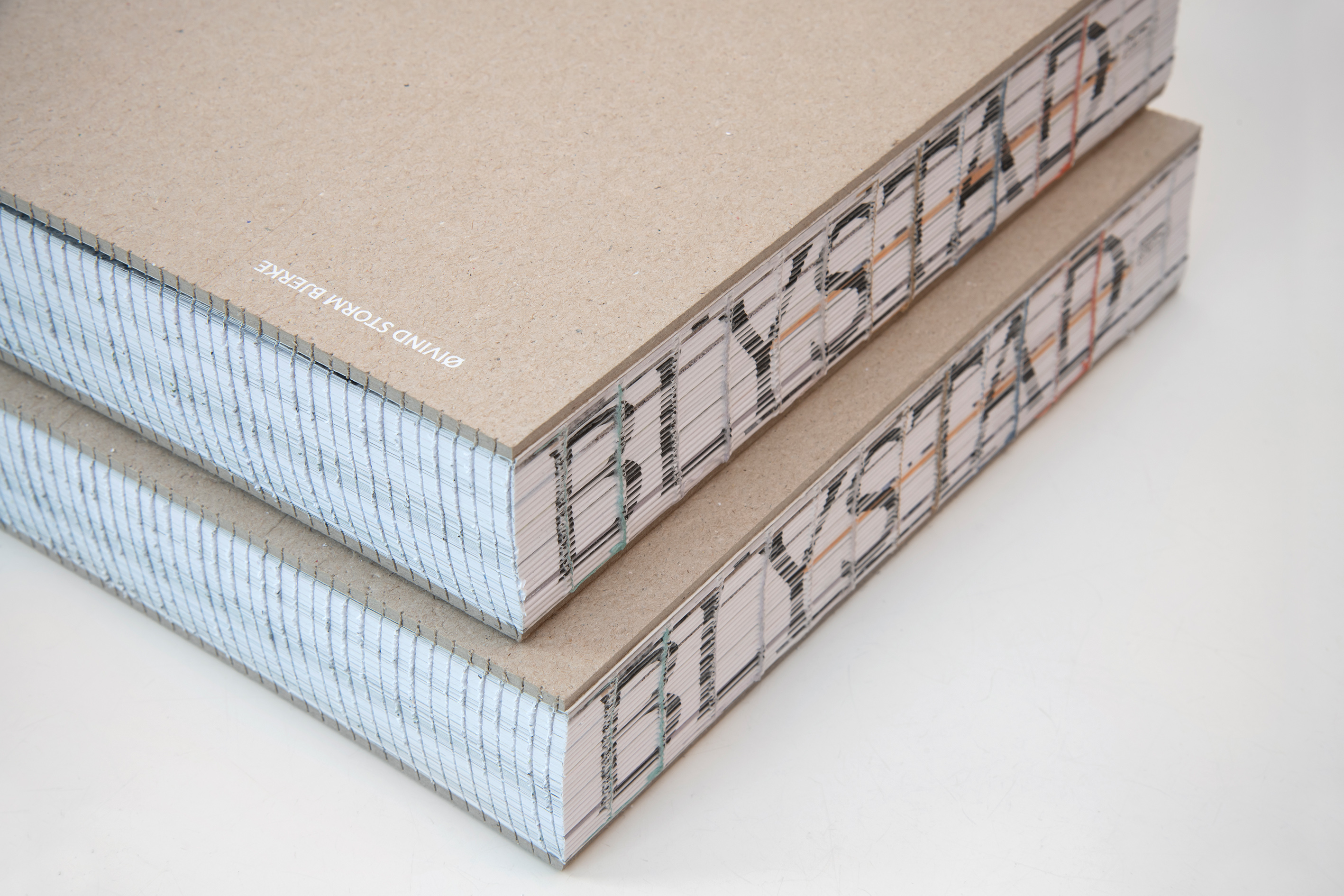
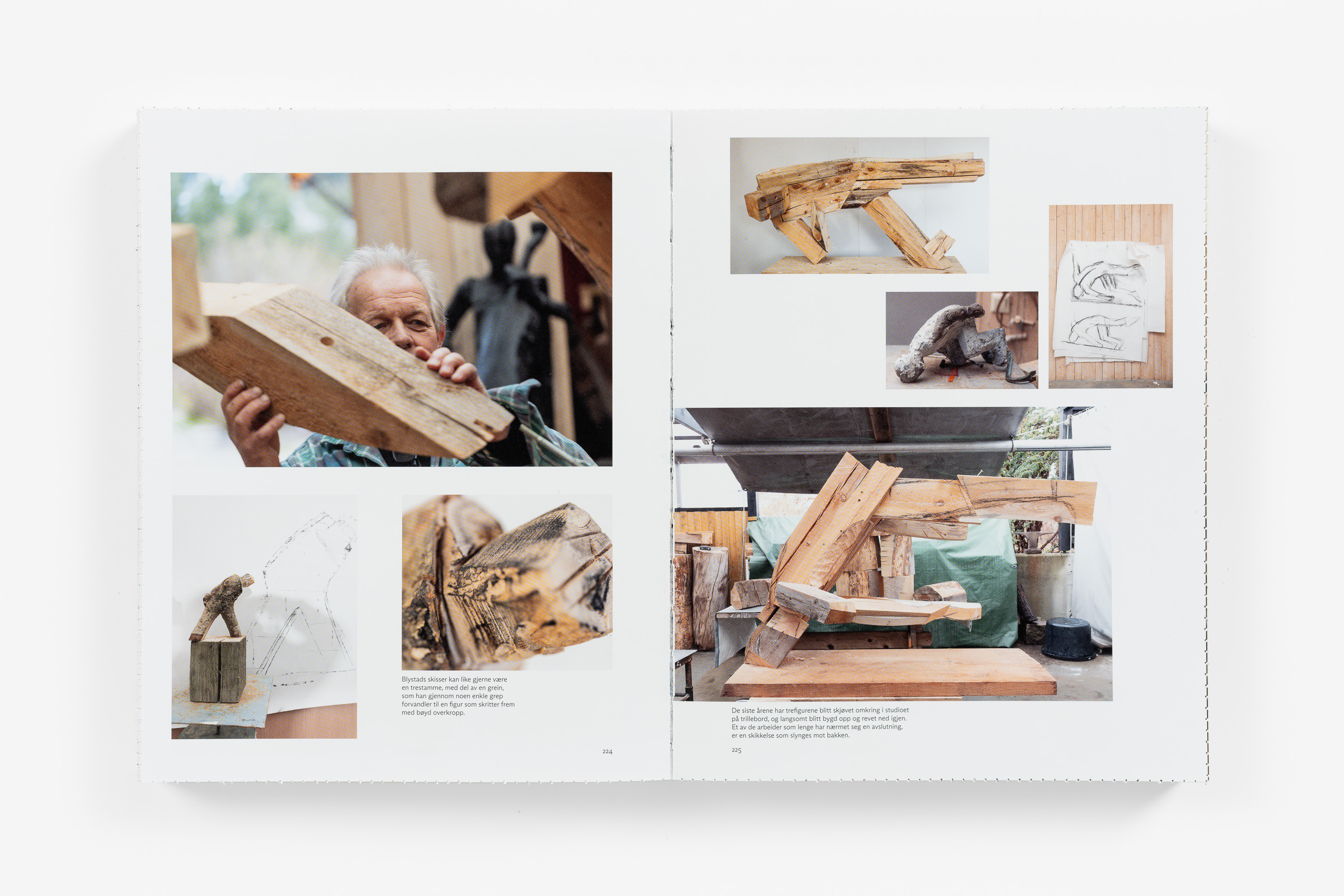
The book covers Blystad’s entire oeuvre, from his early years in Bergen, through exhibitions and acquisitions in the 1990s and 2000s, up to his current creative practice in the quarry at Skjeberg, Østfold.
© Orfeus Publishing
Author: Øivind Storm Bjerke
Publishing editor: Birgitte M. Siem
Design/repro: Halvor Bodin
Photography: Øystein Thorvaldsen, Halvard Haugerud, Halvor Bodin, Øivind Storm Bjerke and more
Orfeus Publishing
Kristian Blystad website
View all projects with Orfeus Publishing here.
2024
19 x 24 cm
464 pages
ISBN: 978-82-93959-106
Livonia Print SIA, 2024, Latvia
Paper: Arctic Matt 150 g/m²
Endpapers: Munken Lynx 150 g/m²
Typography: ABC Arizona
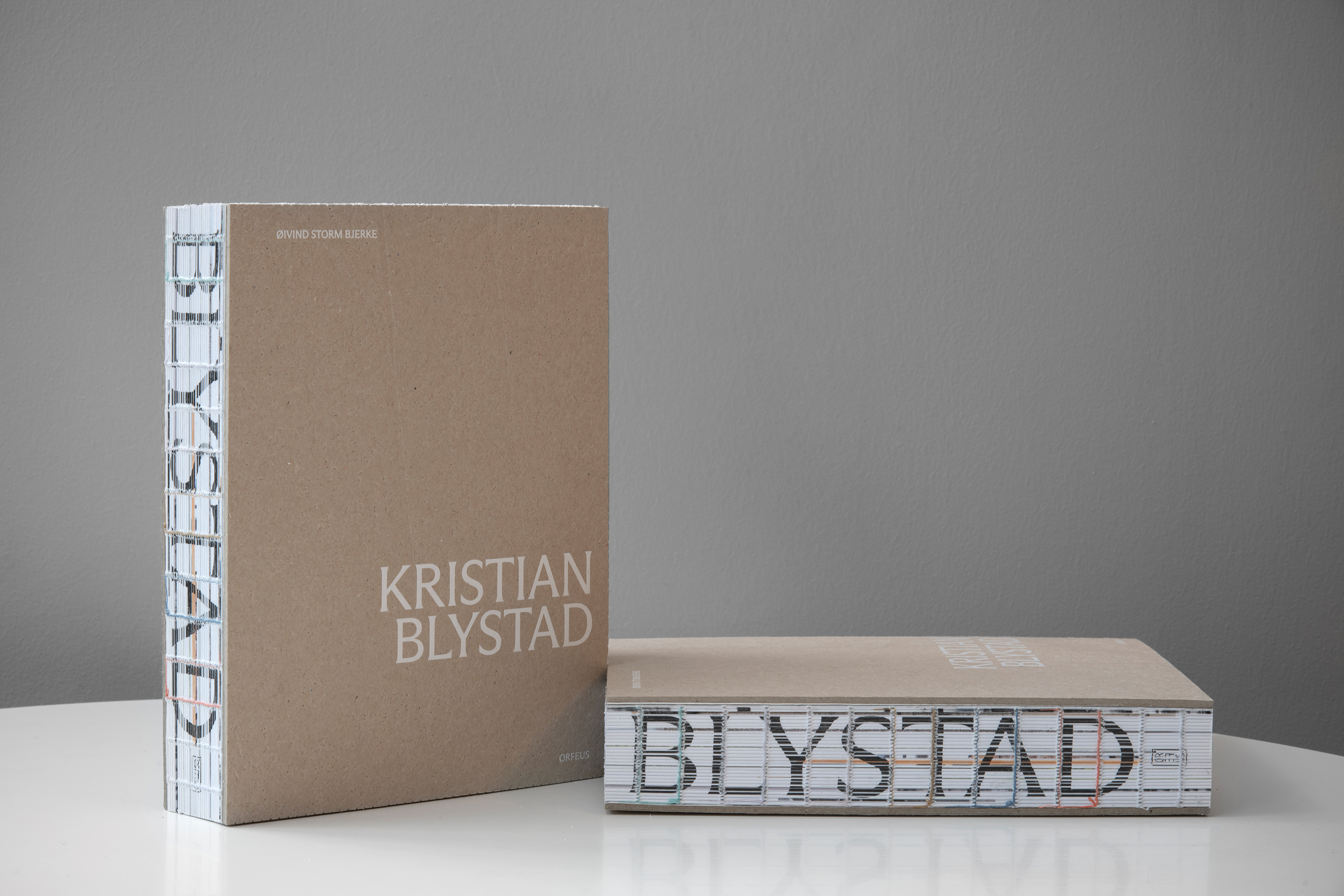
Binding: Open spine, edge milling, blind debossed cardboard, foilblocked with white, coloured threads (7 colours)
Language: Norwegian
Documentation photos above: Øystein Thorvaldsen.
More documentation photos to come.
![]()
The book Kristian Blystad is among the selected 23 books for The Most Beautiful Norwegian Books 2025 (Årets vakreste bøker). The exhibition in Oslo is open 28 May–15 June at Grafill in Oslo. Online presentation at grafill.no.
Jury’s Comment
This is a book that confidently translates the artist’s monumental visual language into book form. Its physical presence – weighty, coarse, and rich in detail – mirrors Blystad’s sculptures in a way that feels both authentic and apt. The production choices are numerous: exposed spine, multicoloured thread, milled edges, blind embossing, and foil stamping. It’s a lot, but here everything is rooted in a clear concept and executed with precision and sensitivity to the material. The typesetting is heavy and solid, yet balanced with space and rhythm. Variations in layout and excellent photographs – both of the artworks and the creative process – give the book depth and dynamism. The visual and tactile elements work together in a cohesive and carefully crafted publication that not only documents an artistic practice but also conveys it in a sensuous and physical way. A strong and solid monograph that gives Kristian Blystad’s art a dignified and lasting book format.
“In the competition books with exceptionally high quality in design, creative solutions, and choice of materials are awarded. The aim is to inspire the consistent use of design in book publishing and to highlight everyone involved in creating them.”
19 x 24 cm
464 pages
ISBN: 978-82-93959-106
Livonia Print SIA, 2024, Latvia
Paper: Arctic Matt 150 g/m²
Endpapers: Munken Lynx 150 g/m²
Typography: ABC Arizona
Binding: Open spine, edge milling, blind debossed cardboard, foilblocked with white, coloured threads (7 colours)
Language: Norwegian
Documentation photos above: Øystein Thorvaldsen.
More documentation photos to come.
The book Kristian Blystad is among the selected 23 books for The Most Beautiful Norwegian Books 2025 (Årets vakreste bøker). The exhibition in Oslo is open 28 May–15 June at Grafill in Oslo. Online presentation at grafill.no.
Jury’s Comment
This is a book that confidently translates the artist’s monumental visual language into book form. Its physical presence – weighty, coarse, and rich in detail – mirrors Blystad’s sculptures in a way that feels both authentic and apt. The production choices are numerous: exposed spine, multicoloured thread, milled edges, blind embossing, and foil stamping. It’s a lot, but here everything is rooted in a clear concept and executed with precision and sensitivity to the material. The typesetting is heavy and solid, yet balanced with space and rhythm. Variations in layout and excellent photographs – both of the artworks and the creative process – give the book depth and dynamism. The visual and tactile elements work together in a cohesive and carefully crafted publication that not only documents an artistic practice but also conveys it in a sensuous and physical way. A strong and solid monograph that gives Kristian Blystad’s art a dignified and lasting book format.
“In the competition books with exceptionally high quality in design, creative solutions, and choice of materials are awarded. The aim is to inspire the consistent use of design in book publishing and to highlight everyone involved in creating them.”



Photographs above from Årets vakreste bøker: KUNSTDOK / Istvan Virag.
Juryens kommentar
Dette er en bok som med sikker hånd oversetter kunstnerens monumentale formspråk til bokformatet. Den fysiske tilstedeværelsen – tung, grov og detaljrik – speiler Blystads skulpturer på en måte som oppleves som både troverdig og treffende. Produksjonsgrepene er mange: åpen rygg, flerfarget tråd, freste snitt, blindpreg og foliering. Det er mye, men her er alt forankret i en tydelig idé og gjennomført med presisjon og forståelse for materialet. Satsspeilet er tungt og solid, men balansert med luft og rytme. Variasjon i layout og gode fotografier – både av verk og arbeidsprosess – gir boken dynamikk og dybde. Det visuelle og taktile spiller sammen i en helhetlig og gjennomarbeidet bok, som ikke bare dokumenterer et kunstnerskap, men også formidler det sanselig og fysisk. En sterk og solid monografi som gir Kristian Blystads kunst et verdig og varig bokformat.
Dette er en bok som med sikker hånd oversetter kunstnerens monumentale formspråk til bokformatet. Den fysiske tilstedeværelsen – tung, grov og detaljrik – speiler Blystads skulpturer på en måte som oppleves som både troverdig og treffende. Produksjonsgrepene er mange: åpen rygg, flerfarget tråd, freste snitt, blindpreg og foliering. Det er mye, men her er alt forankret i en tydelig idé og gjennomført med presisjon og forståelse for materialet. Satsspeilet er tungt og solid, men balansert med luft og rytme. Variasjon i layout og gode fotografier – både av verk og arbeidsprosess – gir boken dynamikk og dybde. Det visuelle og taktile spiller sammen i en helhetlig og gjennomarbeidet bok, som ikke bare dokumenterer et kunstnerskap, men også formidler det sanselig og fysisk. En sterk og solid monografi som gir Kristian Blystads kunst et verdig og varig bokformat.

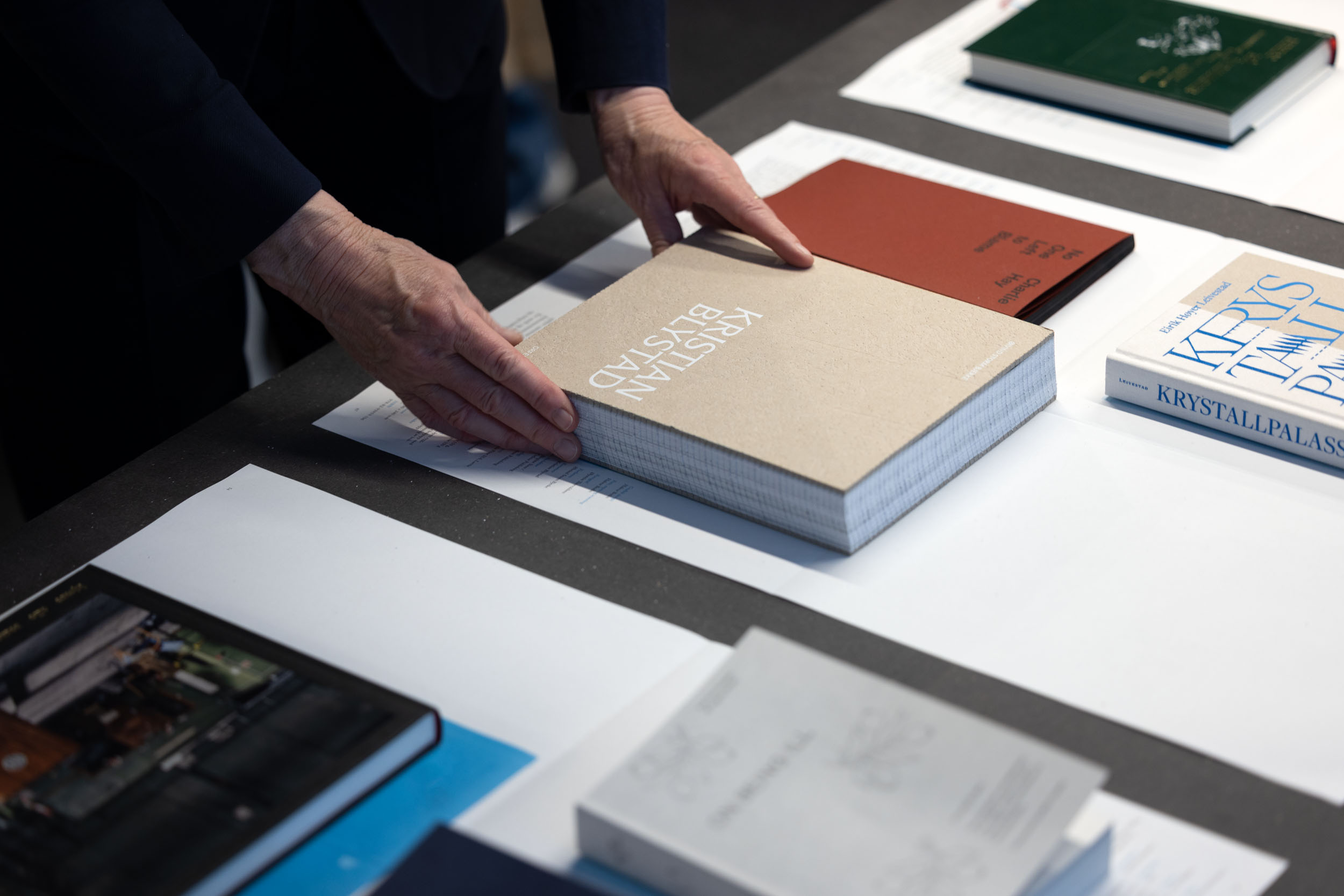


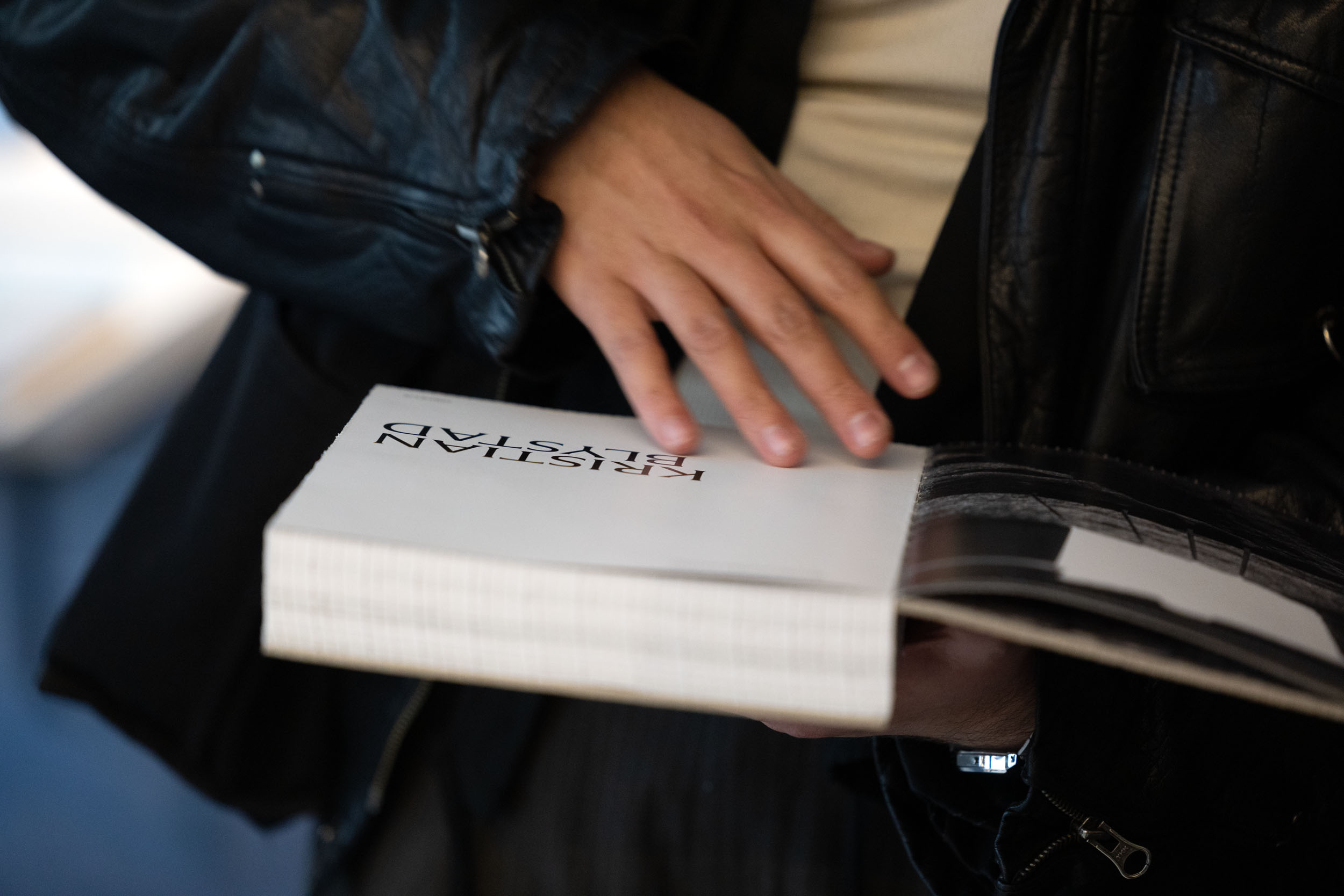
Photos from the exhibition at Grafill: Halvor Bodin